Voltage Stability in GPUs: Ceramic Components and Their Impact on Frame Consistency
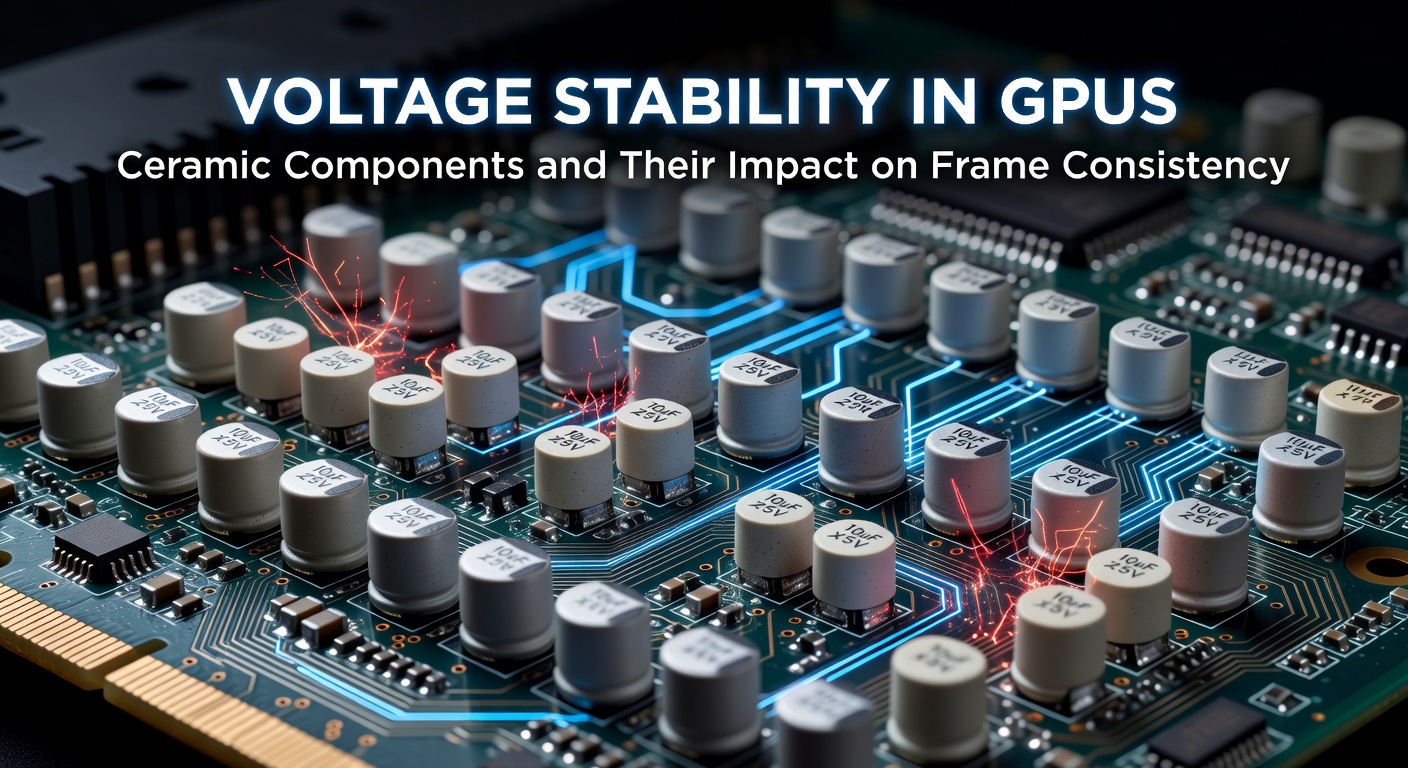
Graphics processing units rely on stable voltage delivery to maintain consistent performance during demanding computational tasks, and ceramic components play a central role in achieving that stability across high-load scenarios. Engineers design power delivery networks with multiple layers of ceramic capacitors to filter noise and respond quickly to sudden current demands that occur when rendering complex scenes in real time.
Fundamentals of GPU Power Delivery Networks
Modern GPUs incorporate sophisticated voltage regulator modules that convert higher input voltages down to the precise levels required by shader cores, memory controllers, and other subsystems, yet rapid load changes during frame rendering can create transient voltage drops if filtering components cannot keep pace. Ceramic capacitors, particularly multilayer ceramic capacitors known as MLCCs, offer low equivalent series resistance and high capacitance density that allows them to supply instantaneous current without significant voltage sag.
Research from institutions focused on power electronics shows that these components reduce ripple voltage by absorbing and releasing charge at frequencies matching the GPU's switching regulators, which often operate in the hundreds of kilohertz range. When voltage remains within tight tolerances, clock speeds stay locked at target values instead of throttling due to power limit detection circuits, directly supporting steadier frame output in applications where frame timing matters most.
Ceramic Material Properties and Electrical Behavior
Ceramic dielectrics used in GPU decoupling capacitors exhibit temperature-stable characteristics compared with other capacitor types, maintaining consistent capacitance across the thermal ranges encountered in compact system designs or prolonged gaming sessions. Class II ceramic materials such as X7R and X5R provide high volumetric efficiency while Class I options like C0G deliver superior stability for critical reference voltage lines, and manufacturers select mixtures based on placement within the power distribution network.
Data collected during hardware validation cycles indicates that arrays of ceramic capacitors positioned near GPU dies minimize impedance at high frequencies, which prevents localized voltage starvation that would otherwise manifest as stuttering or uneven frame pacing. Observers note that as process nodes shrink and transistor counts rise, the number and quality of these ceramic elements have become decisive factors in sustaining performance consistency under variable workloads.
Impact on Frame Timing and Rendering Consistency
Frame consistency depends on predictable execution timing within the GPU pipeline, and voltage fluctuations can trigger protective mechanisms that reduce operating frequency or insert wait states to prevent errors. Studies examining power integrity in consumer graphics hardware reveal that insufficient ceramic decoupling leads to increased variance in frame delivery intervals, even when average frame rates appear acceptable on monitoring tools.
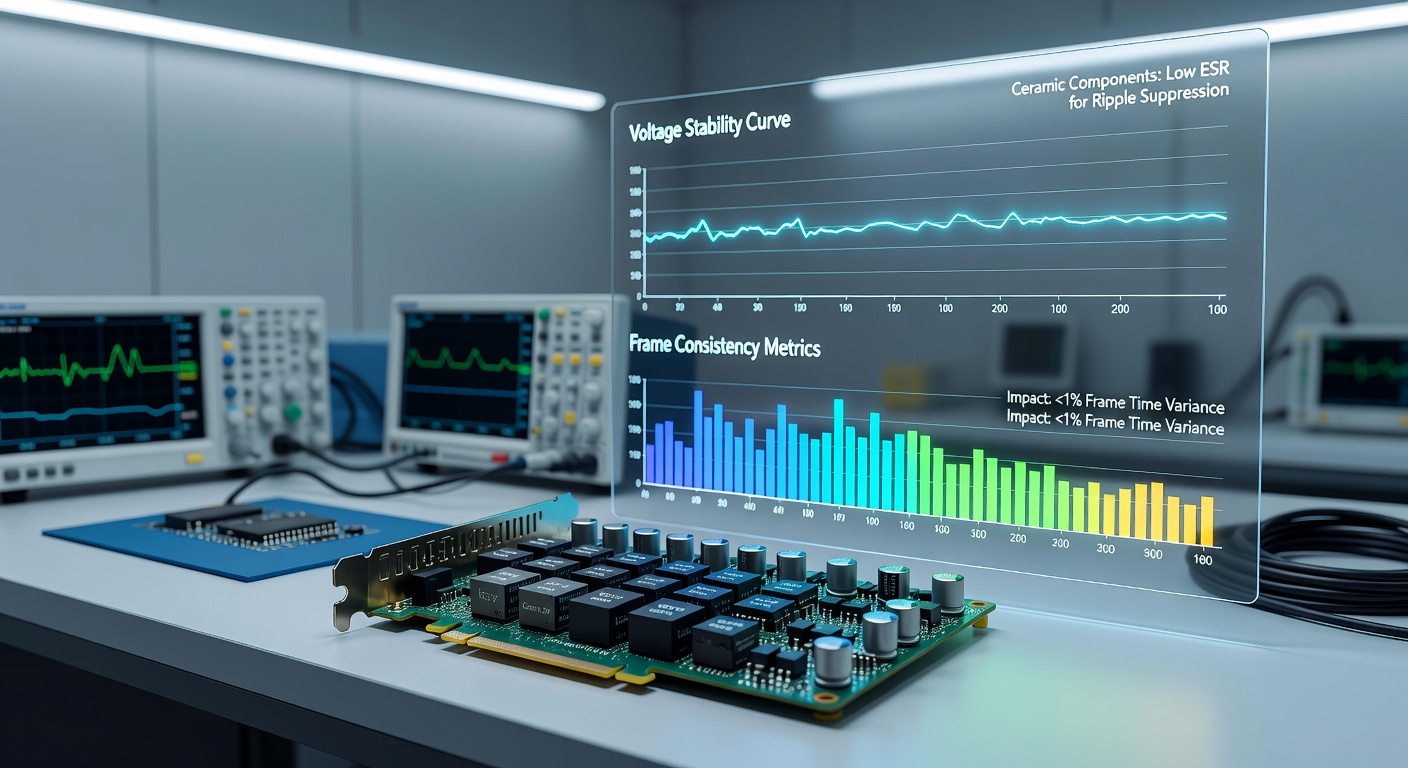
Engineers address these issues by optimizing the placement and value distribution of ceramic components around voltage regulator outputs adn die power pins, creating a low-impedance path that supplies energy during peak demand spikes. In practice this approach keeps core voltages within specification windows that avoid clock gating events, allowing the GPU scheduler to maintain consistent throughput across successive frames.
Design Trends Emerging in 2026 Hardware
By May 2026, several GPU architectures introduced finer-grained power domains that require denser arrays of high-performance ceramic capacitors to manage localized transients, according to reports from semiconductor packaging specialists. Newer board layouts incorporate embedded ceramic layers within the substrate itself, reducing parasitic inductance and improving response times compared with surface-mounted solutions alone.
Industry data compiled by electronics research groups shows measurable improvements in frame time variance when boards employ advanced ceramic formulations capable of handling higher ripple currents without derating. These developments coincide with increasing adoption of higher refresh rate displays, where even small timing deviations become perceptible to users running competitive or simulation titles.
Testing and Validation Approaches
Validation teams employ high-bandwidth oscilloscopes and current probes to characterize power rail behavior under synthetic and real-world workloads, capturing microsecond-scale events that correlate with frame delivery anomalies. Results from such measurements guide iterative refinements in capacitor selection and layout, confirming that targeted ceramic component strategies deliver quantifiable reductions in voltage deviation metrics.
One case documented by hardware analysts involved comparing reference designs against modified boards with additional ceramic elements, revealing tighter clustering of frame intervals without changes to average throughput. Such findings underscore how power integrity directly influences perceived smoothness even when headline performance numbers remain unchanged.
Conclusion
Ceramic components continue to serve as foundational elements in GPU power architectures that support consistent frame delivery, with ongoing material and placement innovations addressing the demands of denser transistor integration and variable computational loads. Evidence from validation programs and design documentation indicates that careful attention to these passive devices yields measurable benefits in frame timing stability across a range of operating conditions. As GPU designs evolve, the role of optimized ceramic networks in maintaining voltage integrity remains central to achieving reliable rendering performance.