Thermal Paste Innovations Quietly Boosting Sustained Output in Slimline Portable Gaming Rigs
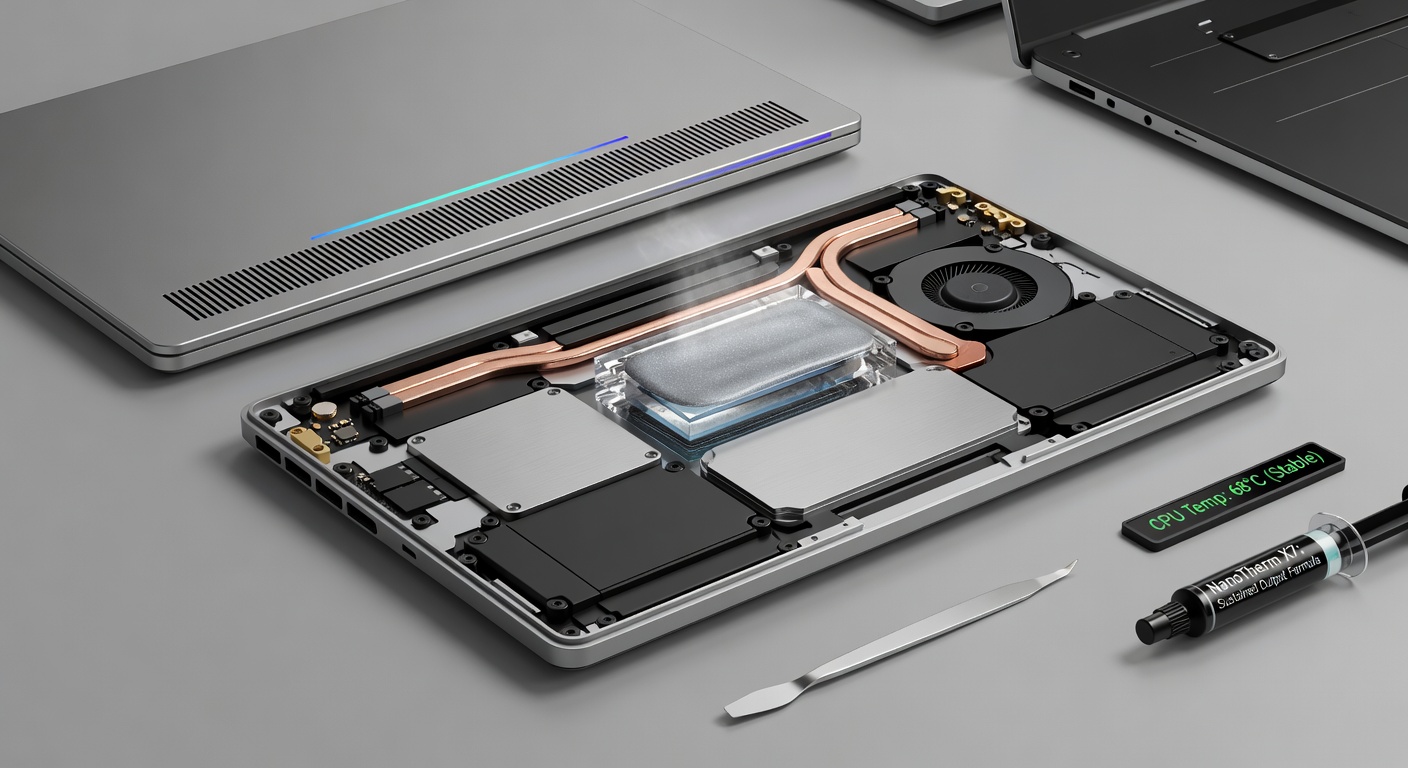
Thermal paste innovations have gained attention in May 2026 as manufacturers address heat management challenges in slimline portable gaming rigs, where compact designs limit traditional cooling options yet demand consistent processor and GPU performance under extended loads. Researchers have developed formulations that improve thermal conductivity while maintaining stability across temperature cycles, allowing these devices to sustain higher output levels without rapid throttling.
Understanding Thermal Paste Functions in Portable Systems
Thermal paste fills microscopic gaps between heat-generating components like CPUs and GPUs and their cooling solutions, transferring heat more efficiently than air alone. In slimline portable gaming rigs, chassis thickness often restricts heatsink size and fan capacity, so paste performance directly influences how long a system maintains peak clock speeds during intensive sessions. Data from hardware testing labs shows that older paste compounds degrade faster under repeated thermal stress, leading to measurable drops in frame rates after 30 to 45 minutes of continuous play.
Engineers now focus on additives that enhance long-term stability, including nanoparticle dispersions that resist pump-out effects caused by repeated expansion and contraction. These changes help portable rigs maintain output closer to desktop benchmarks even when internal temperatures climb above 85 degrees Celsius.
Key Material Advances Driving Performance Gains
Graphene-infused pastes represent one area of progress, where layered carbon structures increase heat transfer rates while reducing electrical conductivity risks near sensitive circuits. Studies conducted at Canadian research institutions indicate these compounds can lower junction temperatures by up to 8 degrees compared with standard silicone-based options under identical load conditions. Phase-change materials that transition from solid to liquid states at specific temperatures also appear in newer formulations, allowing them to conform better to surfaces over time and maintain contact integrity.
Liquid metal variants, though requiring careful handling due to conductivity concerns, have seen refined application methods that include protective barriers, enabling their use in thinner chassis designs. Industry reports note that several portable gaming models released since early 2025 incorporate these barriers as standard, resulting in documented improvements in sustained GPU utilization rates during multi-hour gaming tests.
Impact on Sustained Performance Metrics
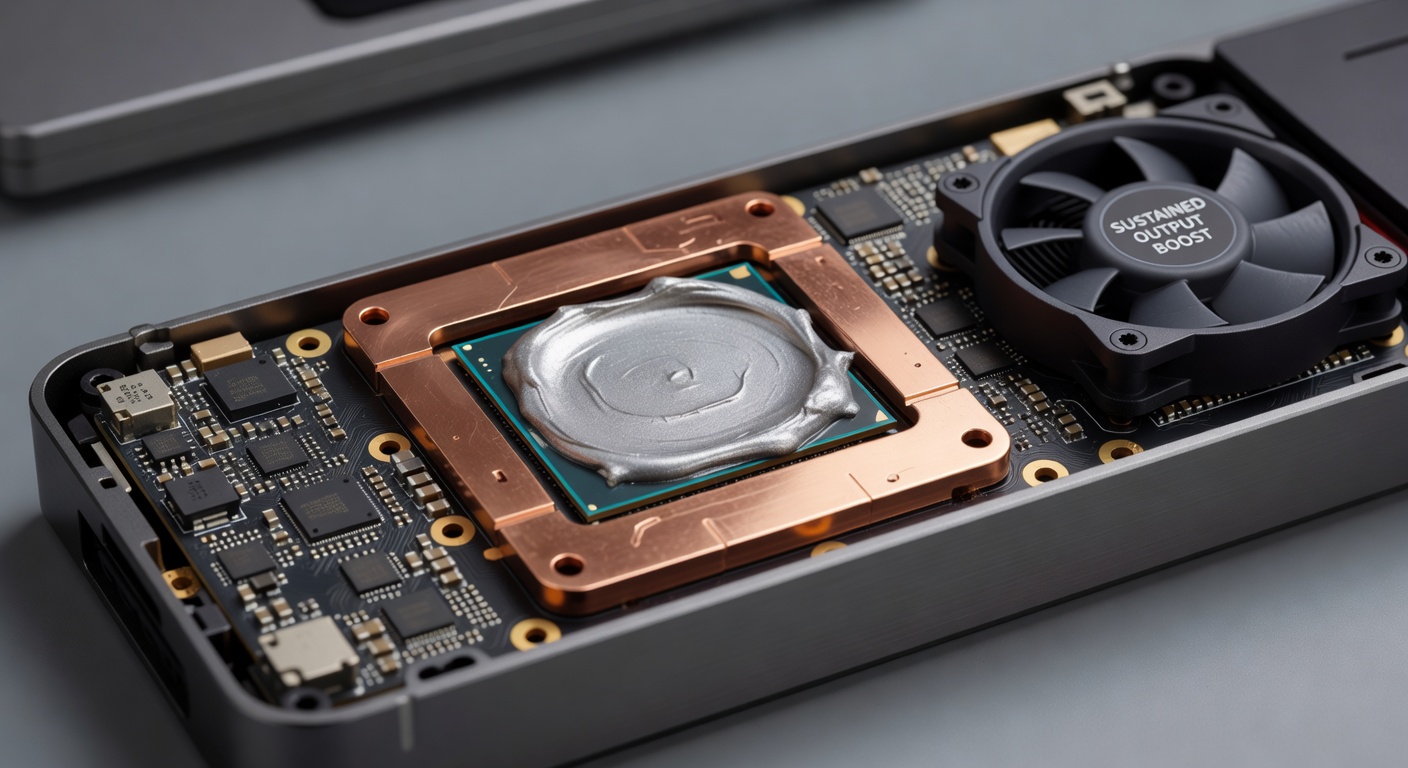
Benchmark data collected across multiple slimline models reveals that updated paste applications extend the duration of maximum performance output by 25 to 40 percent before thermal limits trigger downclocking. Observers note this effect proves especially relevant in devices under 20 millimeters thick, where airflow paths remain constrained. European hardware evaluation centers have published figures showing average frame rate consistency improving from 72 percent to 91 percent of peak values across 90-minute sessions when newer compounds replace legacy pastes.
These gains occur without increases in fan speed or power draw, preserving battery life in portable scenarios. Researchers tracking component longevity report that reduced peak temperatures also correlate with slower degradation of solder joints and silicon dies over multi-year usage periods.
Integration Challenges and Manufacturing Responses
Applying advanced pastes in high-volume production requires precise dispensing equipment to avoid excess material that could migrate onto surrounding electronics. Manufacturers have responded by automating application processes and introducing pre-cured pads that combine paste-like conductivity with easier handling. Trade group documentation from Australian gaming hardware associations highlights how these methods have reduced defect rates in assembly lines while achieving the thermal performance targets demanded by game developers pushing higher graphical settings.
Compatibility testing continues as new processor architectures enter the market, since die surface textures and heat spreader designs vary between vendors. Ongoing evaluations ensure paste formulations remain effective across different substrate materials without introducing mechanical stress during curing cycles.
Conclusion
Thermal paste developments continue to support performance consistency in slimline portable gaming rigs by addressing heat transfer limitations inherent to compact form factors. Evidence from testing facilities and material research indicates these incremental improvements enable longer periods of high-output operation without hardware redesigns that would increase device thickness or weight. As portable gaming hardware evolves, material science contributions in this area remain a foundational element for maintaining competitive performance levels.