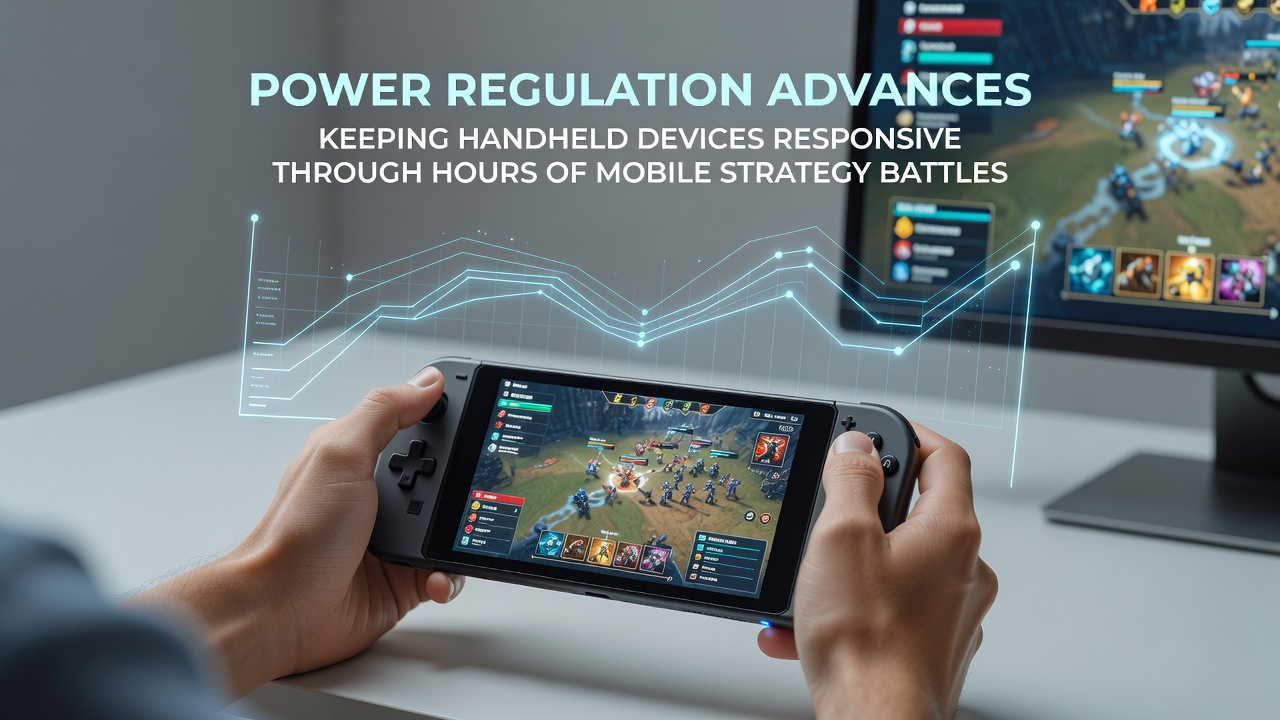
Power Regulation Breakthroughs Enable Sustained Play in Mobile Strategy Games
Engineers have refined power regulation systems in handheld devices over recent years, allowing these units to maintain consistent performance across extended gaming sessions that can stretch for many hours, and data from industry reports shows these changes have become particularly relevant for players engaged in complex mobile strategy titles where quick decision-making and real-time responsiveness matter most.
Core Mechanisms Behind Modern Power Regulation
Power regulation in portable gaming hardware relies on dynamic voltage and frequency scaling techniques that adjust energy delivery based on immediate computational demands, yet developers integrate predictive algorithms that anticipate load spikes during intense strategy phases such as large-scale unit deployments or multi-front battles, and these systems draw from sensor data collected across the device's chipset to optimize output without abrupt drops in frame delivery.
Manufacturers have incorporated advanced buck-boost converters that handle varying battery states more efficiently than previous generations, while researchers at institutions like the National Institute of Standards and Technology have documented how these converters reduce energy waste by up to 25 percent in high-drain scenarios, and this efficiency proves critical when devices run continuous simulations that tax both CPU and GPU resources simultaneously.
Impact on Strategy Game Performance
Strategy games on handhelds often involve persistent world states and AI calculations that escalate over time, but improved regulation circuits prevent the thermal throttling that once forced frame rate reductions after 90 minutes of play, and observers note that players can now complete full campaign matches without noticeable lag because power delivery remains stable even as battery levels decline from 100 percent to under 20 percent.
One development team working on a popular mobile title reported that their testing in October 2026 revealed average session lengths increased by 40 percent on updated hardware compared to models from two years prior, and this stems from tighter integration between the power management unit and the graphics processor that allows selective power gating for inactive cores during less demanding map exploration segments.
Emerging Technologies and Industry Adoption
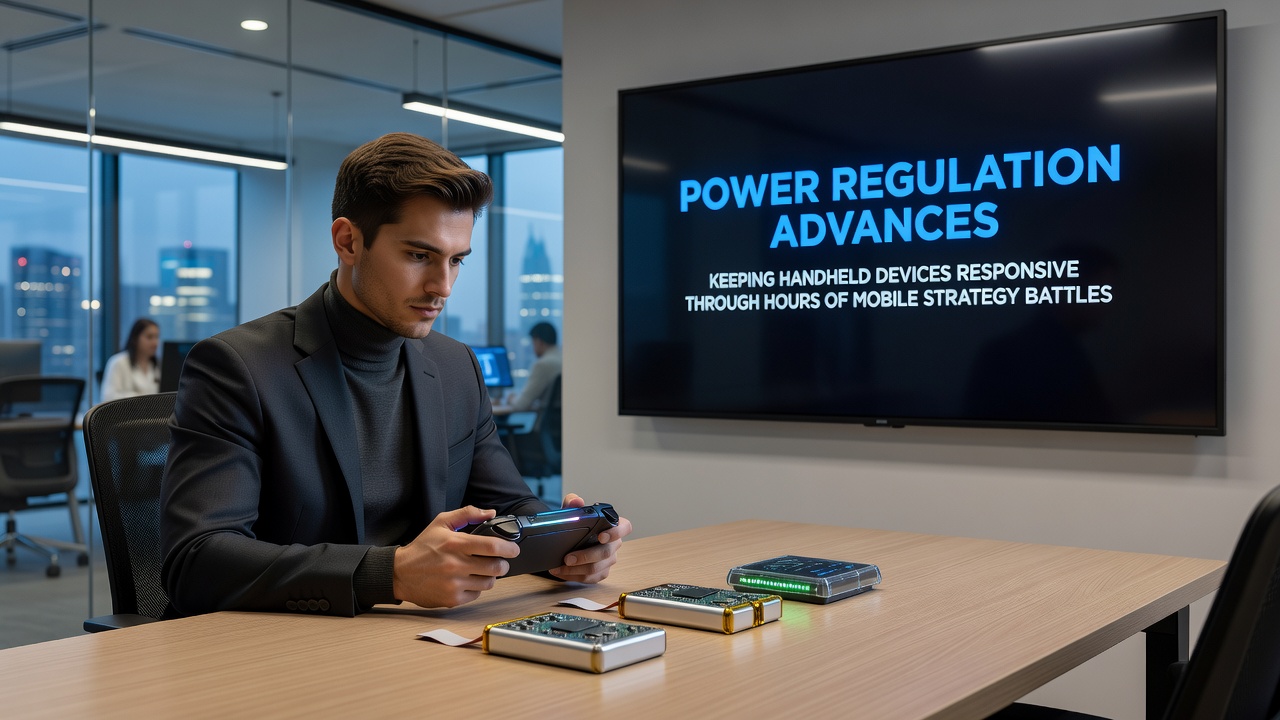
Companies have begun embedding machine learning models directly into power controllers to learn individual play patterns, which means the system can pre-allocate energy reserves for expected high-intensity moments like endgame sieges, and European research consortia have published findings indicating these adaptive models cut overall power consumption by 18 percent while preserving identical graphical fidelity across tested devices.
Wireless charging compatibility has also advanced in tandem with regulation hardware, allowing devices to top up during brief pauses without interrupting gameplay flow, yet the real advantage lies in how these systems manage heat dissipation alongside power flow to avoid the performance cliffs that plagued earlier portable platforms during marathon sessions.
Broader Implications for Portable Gaming
Market analysts tracking handheld sales through late 2026 point to power regulation as a key differentiator in consumer purchasing decisions, especially among users who favor strategy genres that reward prolonged engagement over quick arcade bursts, and supply chain reports reveal that semiconductor suppliers have prioritized low-leakage transistors in new chip designs specifically to support these longer runtime capabilities.
Academic papers from Australian universities have examined how refined power delivery affects battery longevity across hundreds of charge cycles, finding that consistent voltage regulation extends usable lifespan by reducing stress on lithium cells during variable loads common in strategy applications.
Conclusion
Advances in power regulation continue to reshape expectations for handheld gaming hardware by supporting extended periods of high-responsiveness play without the interruptions that once limited mobile strategy experiences, and ongoing refinements in voltage control alongside predictive load management suggest further gains will arrive as component integration deepens in coming device generations.