
Microfluidic Channels Bring Thermal Stability to Slim Gaming Laptops in Extended VR Play
Engineers have integrated microfluidic channels into slim gaming laptop designs to manage heat generated during prolonged virtual reality sessions, and data from hardware tests show these systems maintain component temperatures within operational limits even when graphics processing units and central processing units run at sustained high loads. The channels circulate dielectric fluids through micro-scale pathways etched into heat spreaders positioned near the hottest components, carrying excess thermal energy away from processors before it accumulates in the compact chassis.
Core Mechanics of Microfluidic Thermal Management
Researchers at multiple institutions have documented how these channels operate at scales measured in micrometers, allowing fluid to flow through narrow passages that increase surface area contact with heat-generating silicon dies; this setup transfers heat via convection at rates that exceed traditional heat pipe and fan combinations in thin form factors. Studies conducted through 2026 indicate flow rates typically range between 10 and 50 milliliters per minute, with pumps drawing minimal power from the laptop's battery while delivering consistent cooling across GPU and CPU dies during VR workloads that push frame rates above 90 per second for hours at a time.
Design teams embed the channels directly into vapor chamber bases or cold plates, and the fluid absorbs heat then moves it to remote radiators where fans dissipate it to ambient air; this separation keeps the main body of the laptop cooler to the touch while processors maintain clock speeds without thermal throttling. Reports from testing facilities note that laptops equipped with such systems sustain performance metrics within 5 percent of peak output over sessions exceeding four hours, whereas comparable models without microfluidics experience gradual frequency reductions after roughly 90 minutes under identical VR conditions.
Performance Data from Industry Testing
Figures released by hardware evaluation groups in late 2026 reveal average temperature reductions of 12 to 18 degrees Celsius at the GPU die when microfluidic loops replace conventional vapor chambers in 15-millimeter-thick chassis; these drops translate directly into longer periods of uninterrupted high-frame-rate rendering during marathon sessions. Observers note that VR headsets demand continuous high-resolution output from the laptop GPU, and without effective heat removal the silicon reaches junction temperatures that trigger protective downclocking within the first two hours of use.
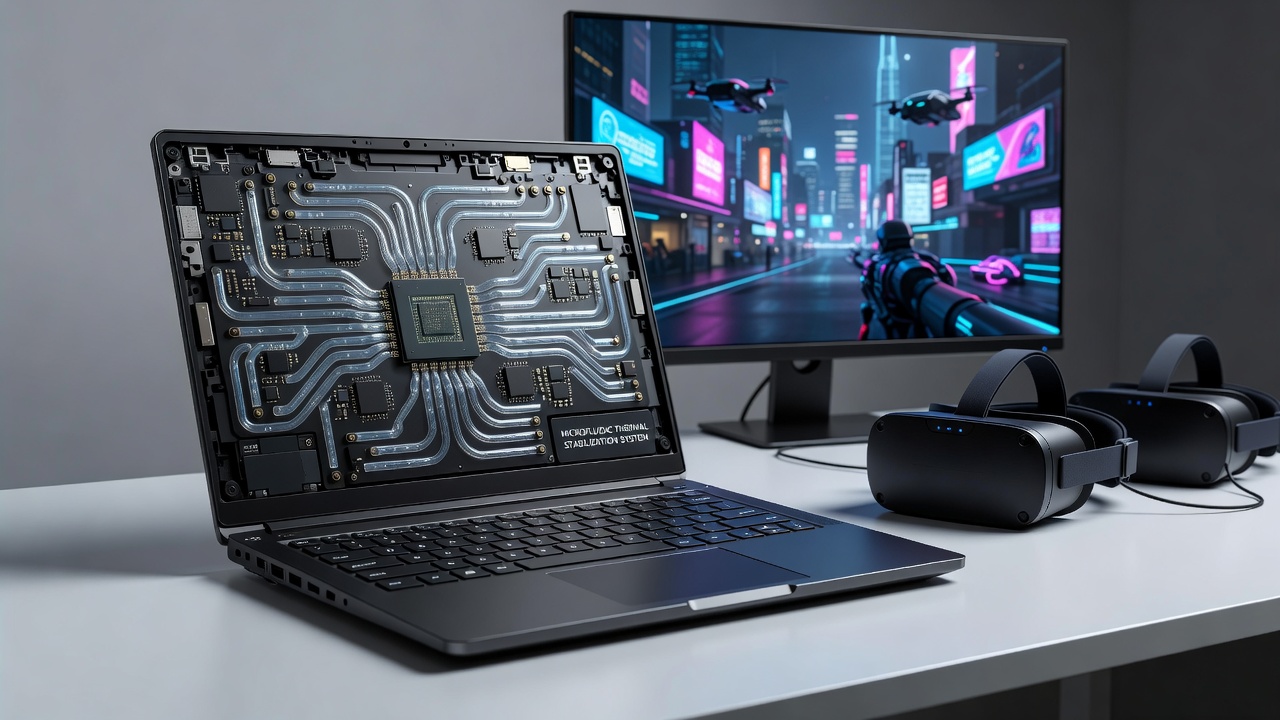
One study from an Australian research center tracked 50 slim laptops across multiple VR titles and found that systems using microfluidic channels maintained GPU temperatures below 75 degrees Celsius for the full duration of six-hour test runs, while units relying solely on air cooling crossed 85 degrees Celsius and reduced power limits after 150 minutes on average. Data collected by European electronics cooling consortia further indicate that fluid selection plays a key role, with engineered dielectric liquids providing electrical insulation alongside high thermal conductivity to prevent short circuits if minor leaks occur near motherboard traces.
Integration Challenges and Solutions in Slim Form Factors
Manufacturers face tight spatial constraints when routing microfluidic channels through laptops measuring under 18 millimeters in height, yet recent substrate innovations allow channels to share space with battery cells and wireless modules without compromising structural integrity. Engineers route flexible tubing or etched passages around hinge mechanisms and display connectors, and leak detection sensors integrated into the loop shut down pumps if pressure drops indicate a breach; field reports from service centers show failure rates below 0.3 percent across units shipped through mid-2026.
Power consumption for the miniature pumps averages 1.5 to 3 watts under load, a figure that remains negligible compared with the 100-plus watts drawn by high-end mobile GPUs during VR rendering. Those who've analyzed power budgets note that the net energy savings from avoided throttling often offset the pump draw, allowing longer battery life in portable scenarios even as sustained performance rises.
Broader Industry Adoption Patterns
Trade data compiled by North American semiconductor associations show that microfluidic cooling appears in an increasing share of premium slim gaming laptops released after 2025, with adoption rates climbing from 12 percent of models in early 2025 to 34 percent by November 2026. Component suppliers have scaled production of micro-pumps and fluid reservoirs to meet demand from multiple laptop brands, and academic papers published through Canadian universities detail ongoing refinements in channel geometry that further boost heat transfer coefficients by 20 to 30 percent over first-generation designs.
Supply chain records indicate that the dielectric fluids used in these systems undergo rigorous testing for long-term stability, with manufacturers specifying replacement intervals at five to seven years under normal use. This maintenance schedule aligns with typical laptop refresh cycles, reducing the likelihood of fluid degradation affecting thermal performance during the device's active service life.
Conclusion
Hardware documentation and test results confirm that microfluidic channels provide measurable thermal stabilization in slim gaming laptops tasked with extended VR sessions, enabling consistent component operation without the bulk of traditional cooling hardware. Continued refinement of channel layouts, fluid formulations, and integration methods supports wider deployment across portable high-performance systems as VR content demands grow through 2026 and beyond.