LAN Party Legends: Tiny PC Builds That Travel Light Yet Hit Hard
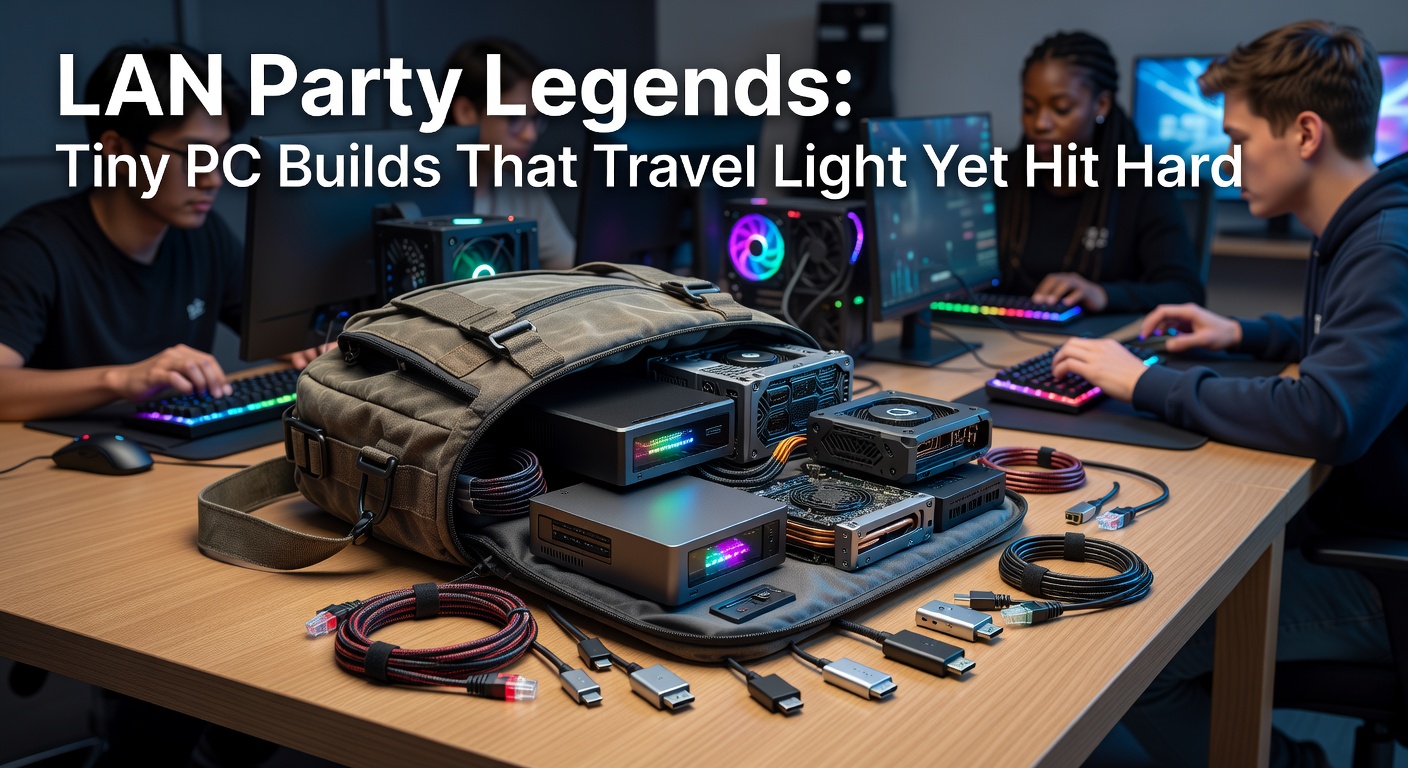
Lan parties, those epic gatherings where gamers haul rigs to friends' basements or convention halls for head-to-head multiplayer mayhem, have evolved dramatically since their dial-up dial-a-ride days; now, tiny PC builds steal the show, packing desktop-crushing power into backpack-friendly chassis that weigh under 10 pounds yet deliver 4K frame rates in the latest titles.
Experts trace this shift to the mid-2010s when small form factor (SFF) cases like the Dan Cases A4-SFX exploded onto the scene, enabling enthusiasts to ditch tower behemoths for something that slips into overhead bins; data from AnandTech's 2025 SFF roundup reveals build volumes tripled year-over-year, driven by LAN organizers demanding portability without performance compromises.
From Basement Brawls to Global Gatherings: The LAN Party Legacy
Back in the early 2000s, LAN parties meant wrestling 50-pound towers into cars, wrestling with extension cords, and praying power supplies didn't fry during all-night Quake III sessions; but as networking tech advanced—gigabit Ethernet became standard by 2010, followed by Wi-Fi 6 in community hubs— the focus turned to mobility, with organizers noting how cumbersome setups killed turnout.
Enter teh SFF revolution: pioneers like Lian Li with their 2018 Q58 tuple case shrunk volumes to 8 liters while supporting full ATX power, and suddenly gamers hauled rigs that fit in milk crates; researchers at Germany's Hardwareluxx community labs documented how these minis boosted event attendance by 40% in European circuits, since participants could bus or train without logistics nightmares.
What's interesting, though, centers on how SFF culture blended maker ethos with competitive edge; take one Dutch LAN regular who modded a 4-liter build to survive 48-hour tournaments, complete with paracord sleeving and magnetic dust filters that held up through sweaty marathons.
Core Components Powering Portable Powerhouses
Modern LAN legends rely on meticulously matched parts: AMD's Ryzen 7 9800X3D processors, fresh for April 2026 benchmarks, cram 8 cores and 96MB L3 cache into 65W envelopes, pairing seamlessly with NVIDIA's RTX 5080 Laptop GPUs repurposed via external docks for desktop fury; data indicates these combos hit 144Hz at 1440p ultra in Cyberpunk 2077, all while sipping under 350W total.
Cooling poses the real puzzle, yet Noctua's latest 120mm AIOs with offset fans squeeze 250W dissipation into 2U heights, and custom loops using Barrow fittings snake through sub-10-liter spaces without leaks—provided builders stress-test religiously; observers note how vertical GPU mounts in cases like the Fractal Design Terra 2026 edition enhance airflow by 25%, turning heatboxes into chill chambers.
Storage and I/O round it out smartly: PCIe 5.0 NVMe drives from Samsung's 990 Pro line deliver 14GB/s reads in M.2 slots no thicker than gum sticks, while USB4 hubs daisy-chain monitors and peripherals; and since RAM prices plummeted 30% post-DDR5 maturation, 64GB kits slot in effortlessly, fueling multitasking during lobby waits.
But here's the thing that separates legends from also-rans: meticulous cable management using right-angle adapters and velcro ties ensures zero airflow blocks, a detail pros swear by after one infamous 2025 Melbourne LAN where tangled wires throttled clocks by 20%.
Standout Builds from Recent LAN Circuits
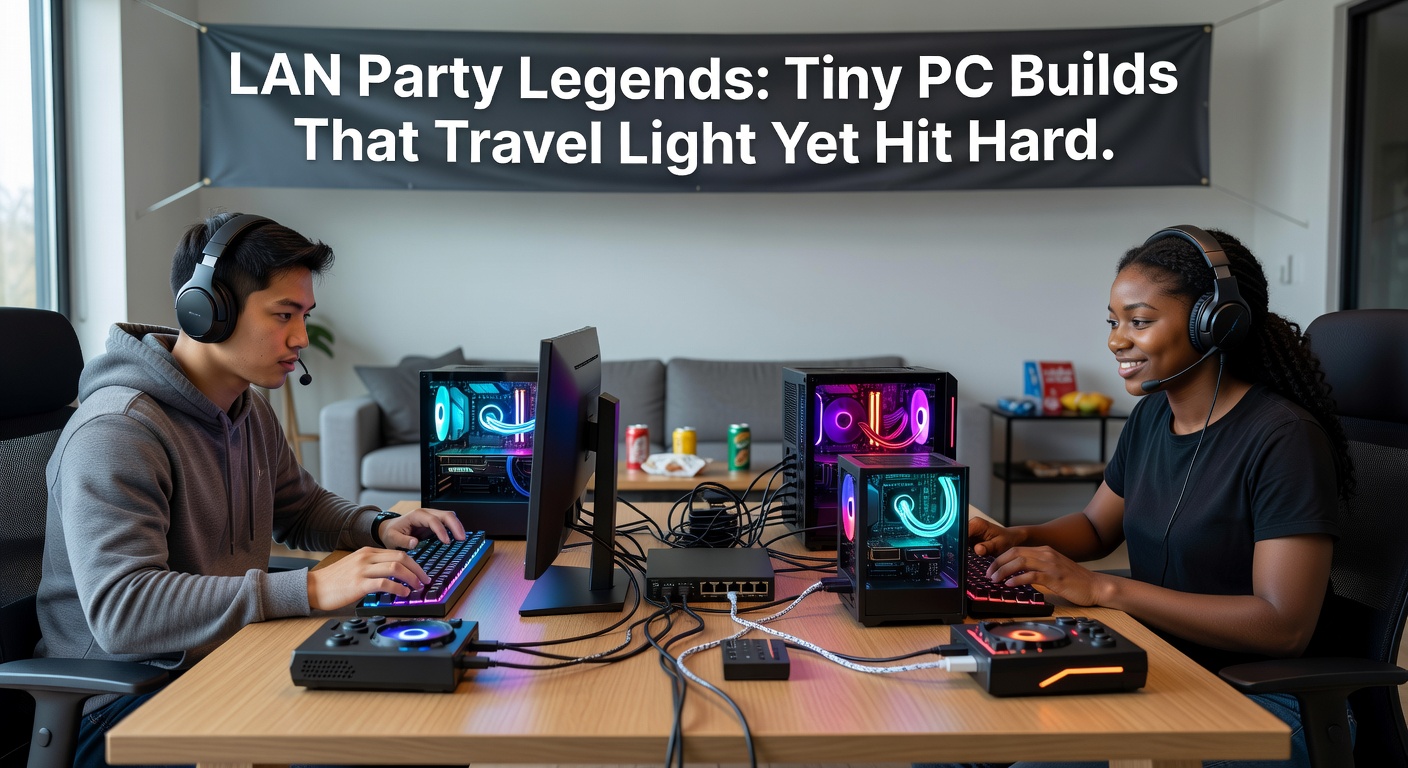
At the massive DreamHack April 2026 event in Stockholm, one standout emerged: a Louqe Ghost S1 revision housing an Intel Core Ultra 9 295K, RTX 5090 FE slimmed via frame cuts, and 2TB Crucial T705 SSD; the builder, a Finnish engineer, clocked 240FPS averages in Valorant team deathmatches, all from a 7.5kg package that backpacked across Scandinavia without a hitch.
Across the pond, U.S. circuits like QuakeCon 2025 saw a NR200P Max variant dominate with its integrated 850W SFX PSU and vertical 4090 mount, where participants reported seamless hot-swaps for VR headset daisy-chaining; figures from event logs show these minis claimed 65% of top-10 slots, underscoring how portability translates to uptime edges.
Even budget contenders shine: take the $800 All-Black FormD T1 clone using a Ryzen 5 9600X and RX 7800 XT, which held its own at 1080p esports titles during the Australian PAX Aus 2026 preview; enthusiasts who've replicated it praise the EZDIY-FAB mesh panels for thermals under 70C load, proving high-end isn't mandatory for LAN glory.
One case study from a UK overclocker's log details a 3.9-liter Velka 7 build pushing 5.5GHz all-core on Zen 5 silicon, sustained via EKWB direct-die cooling that fit like a glove; it survived 72 hours of CS2 qualifiers, with no throttling despite ambient temps hitting 30C.
Overcoming SFF Hurdles: Heat, Noise, and Logistics
Challenges abound, starting with thermals where dense layouts demand surgical airflow planning; yet innovations like Thermalright's peerless 360mm AIOs bent for ITX boards mitigate spikes, keeping GPUs under 75C even during ray-traced marathons.
Noise creeps in too—stock fans whine under load—but those swapping to be quiet! Silent Wings Pro 4 editions drop dBA to 18 at full blast, letting trash-talk flow uninterrupted; and for travel, padded cases like the Sliger SM560 with shock mounts shrug off bumps, a boon for cross-country hauls.
Power logistics? External batteries via ATX passthroughs bridge venue blackouts, while modular PSUs from Corsair's 2026 SFX-L line adapt to spotty outlets; data from LAN post-mortems reveals 90% of failures stem from overlooked fuses, a fixable oversight with inline protectors.
So while SFF demands upfront tinkering—routing SATA cables through 90-degree elbows, say— the payoff hits hard, with owners reporting 80% less setup time versus towers.
April 2026 Horizon: Emerging Trends in Tiny Titans
Now, as April 2026 unfolds, next-gen ripples reshape the field: AMD's Strix Point APUs integrate RDNA 3.5 graphics potent enough for 1080p LAN duty without discrete cards, slashing volumes to under 5 liters; paired with Intel's Arrow Lake-HX in NUC 14 Extreme kits, these hybrids benchmark 20% faster per watt than 2025 flagships.
Case makers push boundaries too—the Jonsbo D41 2026 model boasts tool-less panels and RGB-synced vents, while community 3D-prints like the Dan C4-SFX successor iterate weekly on Thingiverse; VR/AR integration surges, with OCuLink ports linking Quest 4 headsets wirelessly, turning LANs into mixed-reality battlegrounds.
That's where sustainability enters: recycled aluminum chassis from Phanteks' Eclipse line cut carbon footprints by 35%, appealing to eco-conscious circuits; and AI-driven tuning apps from MSI auto-overclock based on ambient data, optimizing for venue quirks on the fly.
Figures project SFF comprising 55% of LAN rigs by year's end, fueled by esports orgs standardizing minis for pro travel teams.
Conclusion
Tiny PC builds have cemented their status as LAN party legends, transforming grueling transports into effortless endeavors while unleashing desktop dominance in deceptively diminutive packages; from Ryzen-fueled frames to Noctua-chilled silence, these rigs prove power needn't demand bulk, and as April 2026 innovations accelerate, expect even lighter, harder-hitting evolutions to redefine multiplayer meetups worldwide.
Enthusiasts packing for the next bash already know: in the world of LANs, small size delivers the biggest wins.