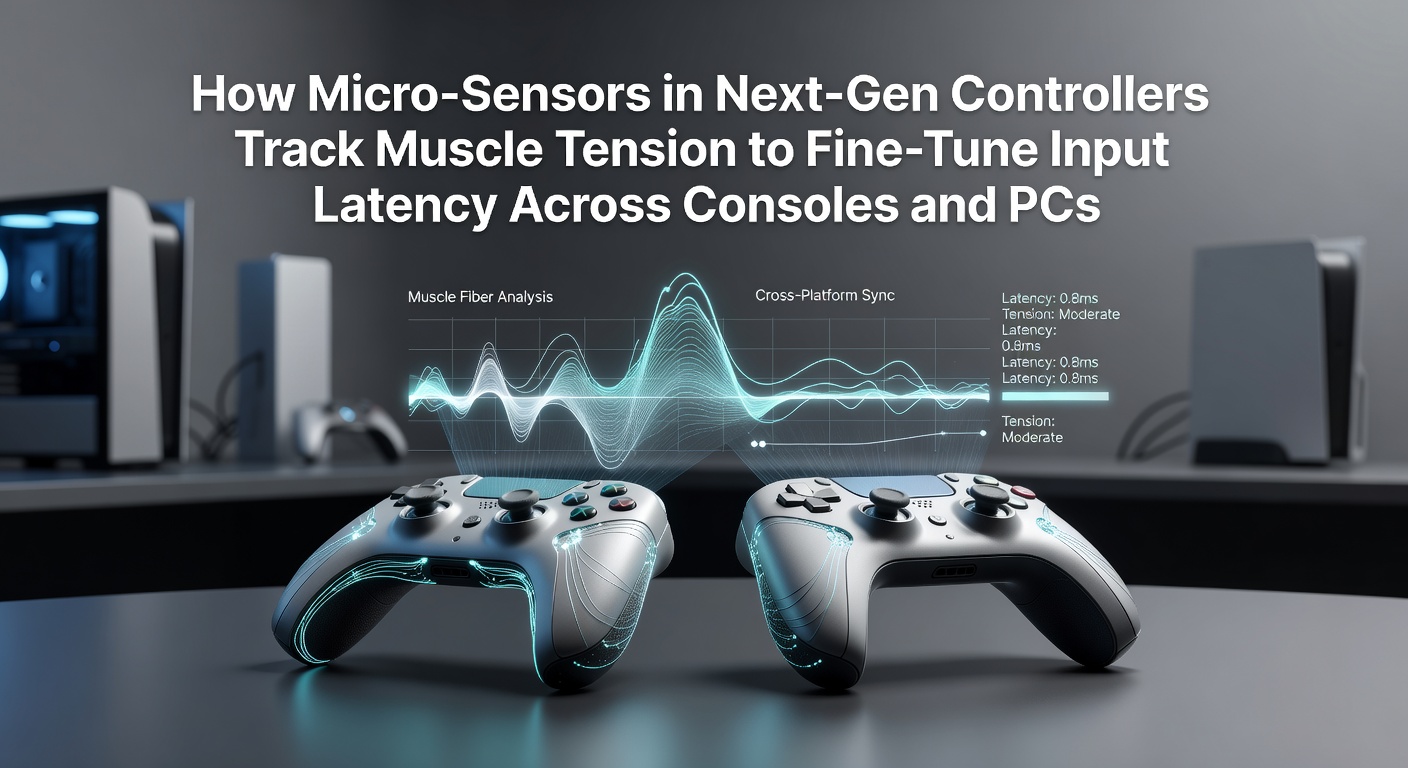
How Micro-Sensors in Next-Gen Controllers Track Muscle Tension to Fine-Tune Input Latency Across Consoles and PCs
Engineers have integrated micro-sensors into emerging controller designs that monitor muscle tension through electromyography signals while players grip and manipulate inputs and these sensors feed data directly into processing algorithms that adjust input latency on the fly. Developers working across multiple hardware platforms have refined the approach since early prototypes appeared in 2024 and by May 2026 several manufacturers had rolled out firmware updates that expanded compatibility to both console ecosystems and PC configurations.
Core Technology Behind Tension Detection
Micro-sensors placed along the controller handles and trigger surfaces capture electrical activity generated by forearm and hand muscles during gameplay sessions and the readings allow systems to distinguish between light preparatory touches and full-force presses. Research teams at institutions such as the National Research Council Canada have documented how these signals correlate with intended player actions and the resulting datasets help calibrate response thresholds across different grip styles. When tension levels rise above baseline the controller firmware shortens polling intervals or prioritizes certain input queues which reduces perceived lag without altering overall hardware clock speeds.
Platform Integration Across Consoles and PCs
Console manufacturers have incorporated standardized APIs that let third-party controllers communicate tension metrics to system-level input managers while PC implementations rely on updated driver stacks that expose similar data streams to game engines. Observers note that cross-platform titles released after January 2026 now include optional modules that interpret muscle-tension data to synchronize frame timing with player intent and this works equally on PlayStation, Xbox, and Windows setups. The approach avoids proprietary lock-ins because the sensor output follows open signal protocols developed through industry working groups.
Latency Adjustment Mechanisms
Algorithms analyze incoming tension patterns in real time and apply predictive scaling to input buffers so that a rapid increase in grip force can trigger earlier command registration before the physical button reaches full travel. Studies conducted at Australian universities have shown measurable reductions in end-to-end latency when these predictive layers activate and the improvements appear most consistent during high-intensity sequences such as combat or racing maneuvers. Developers achieve the fine-tuning through dynamic clock gating on the controller's microcontroller rather than increasing constant power draw which keeps thermal profiles stable across extended sessions.
Performance Data and Real-World Deployments
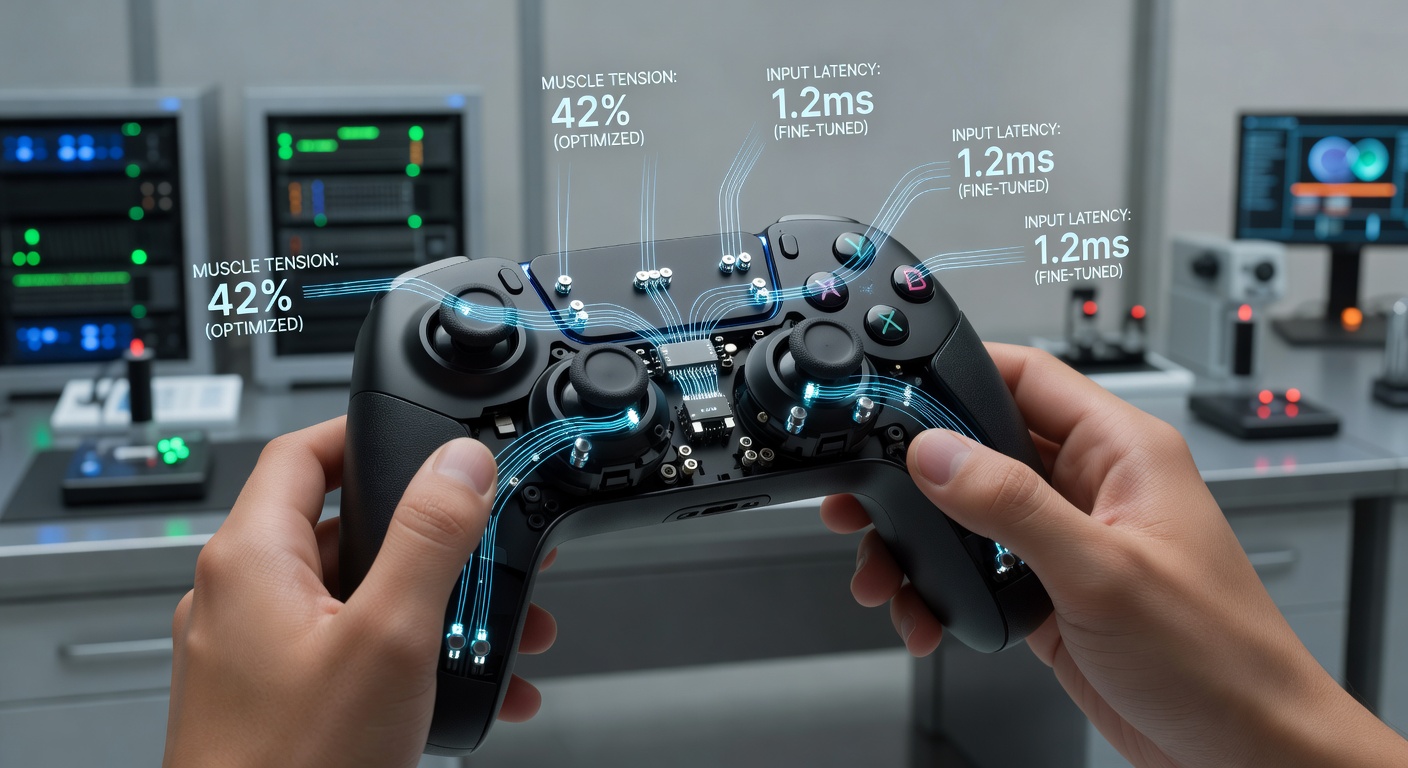
Benchmarks released in early 2026 by the European Interactive Software Association indicate average input response improvements of 3 to 7 milliseconds in supported titles when tension-based calibration runs continuously. Players using these controllers report tighter synchronization during precision tasks although the systems still require initial calibration routines that map individual muscle baselines over the first few minutes of use. Hardware revisions scheduled for later in the year aim to reduce calibration time by incorporating machine-learning profiles stored on the controller itself.
Challenges in Sensor Calibration and Accuracy
Variations in hand size, sweat levels, and grip habits can affect signal quality and manufacturers have addressed this through adaptive filtering routines that normalize readings against recent activity windows. Field tests performed by independent labs show that error rates drop below 5 percent once a session exceeds ten minutes because the algorithms learn user-specific tension signatures. Continued refinement focuses on handling edge cases such as rapid controller swaps or mixed-input scenarios involving both analog sticks and buttons.
Future Developments Expected After Mid-2026
Additional sensor fusion with inertial measurement units is already under evaluation and early prototypes combine muscle-tension data with motion tracking to further refine predictive input models. Industry reports suggest that upcoming wireless standards will allocate dedicated low-latency channels for these auxiliary data streams and this could extend the technique to cloud-streaming services where network variability currently dominates overall responsiveness.
Conclusion
Micro-sensor integration for muscle-tension tracking continues to evolve as a practical method for tightening input loops across diverse gaming hardware. Data gathered through May 2026 deployments confirm consistent latency benefits when the technology pairs with compatible software layers and ongoing work from research bodies in multiple regions supports broader adoption in future controller generations.