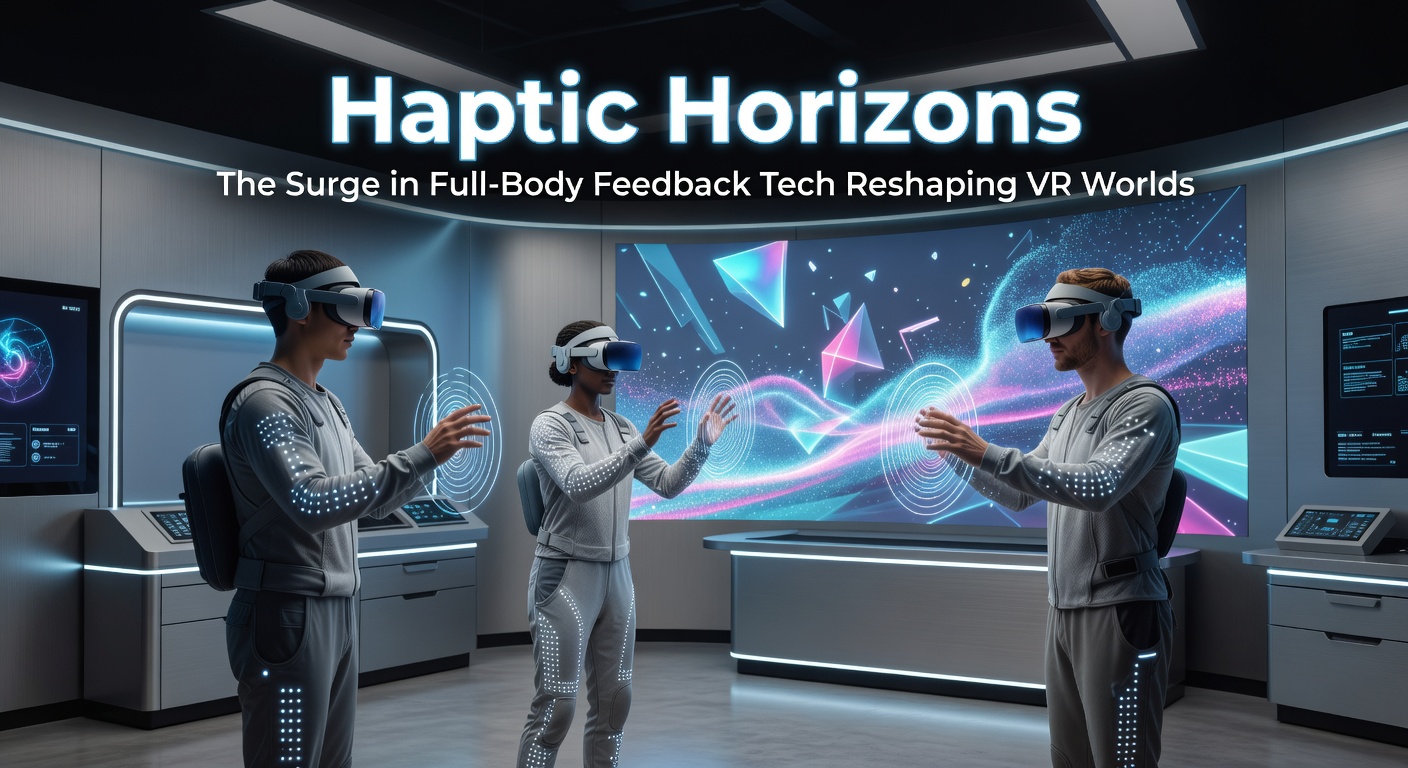
Haptic Horizons: The Surge in Full-Body Feedback Tech Reshaping VR Worlds
The Rise of Immersive Touch in Virtual Reality
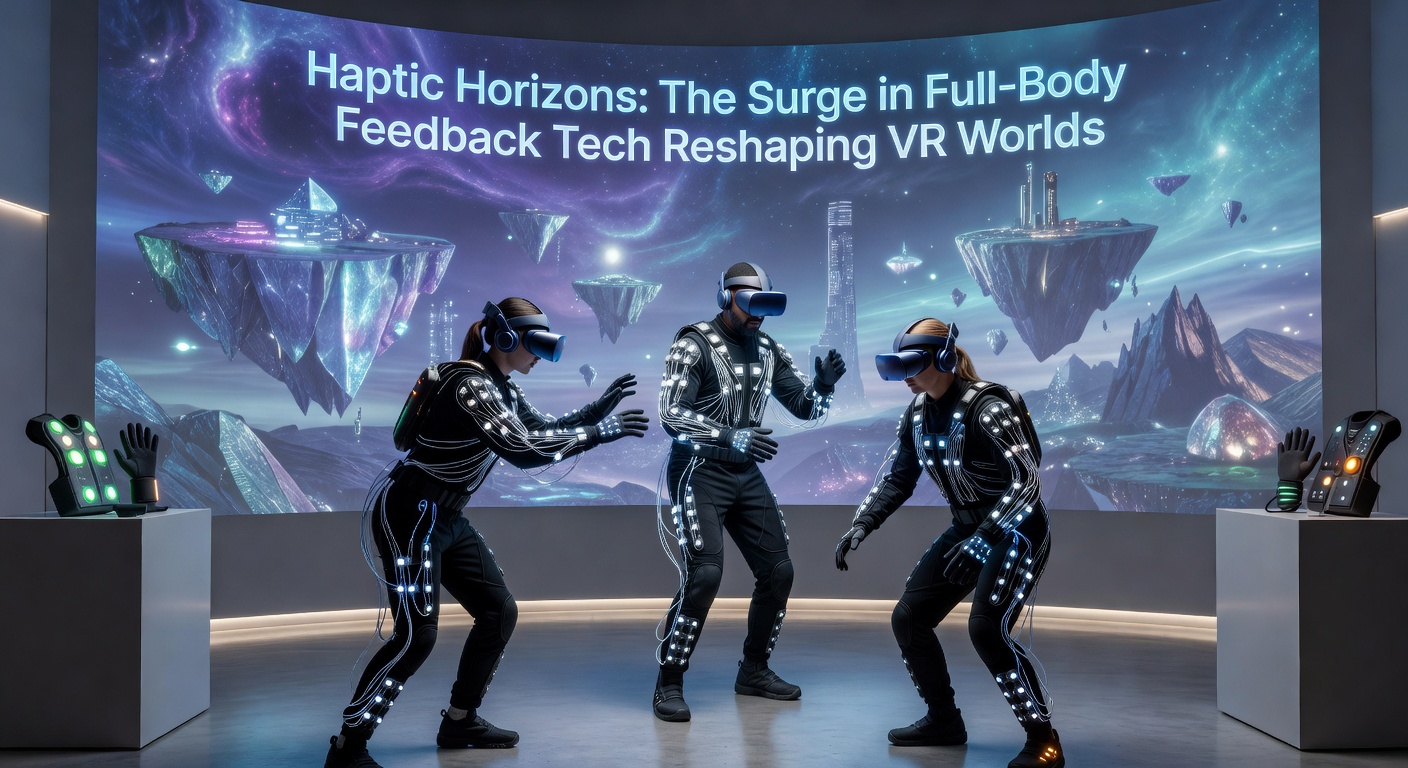
Full-body haptic technology has exploded onto the VR scene, transforming how users interact with digital environments by delivering tactile sensations across the entire body rather than just hands or controllers. Devices like suits and vests packed with actuators now simulate everything from gentle breezes to bone-jarring impacts, making virtual worlds feel startlingly real. Data from IDC research indicates the haptic feedback market for VR/AR grew by 45% year-over-year in 2025, with full-body systems leading the charge because they bridge the gap between sight, sound, and touch in ways gloves alone never could.
What's interesting is how this surge aligns with broader VR adoption; shipments of VR headsets topped 15 million units globally last year, and experts observe that without advanced haptics, many users report motion sickness or disengagement after short sessions. Take the case of early adopters at VR arcades, where those equipped with full-body suits logged 30% longer playtimes compared to standard setups, according to field studies from the MIT HCI group.
And yet, this isn't just about gaming; industries from medicine to manufacturing have latched onto the tech, using it to train workers in hazardous scenarios without real-world risks, all while the hardware gets lighter, cheaper, and more precise.
From Vibes to Full Immersion: How the Tech Evolved
Haptic feedback started simple with rumbling controllers in the 1990s, but full-body systems trace roots to research labs in the early 2010s, where engineers at places like Stanford's Virtual Human Interaction Lab experimented with electrode arrays to mimic textures via electrical signals. Fast forward, and companies now deploy arrays of over 100 vibrotactile motors or pneumatic bladders embedded in neoprene suits, vibrating at frequencies up to 300Hz to replicate raindrops, fabrics, or even insect crawls with uncanny accuracy.
Turns out, the real breakthrough came with hybrid approaches; bHaptics' TactSuit X40, for instance, combines eccentric rotating mass motors with focused ultrasound for directional cues, allowing users to feel arrows whizzing past or punches landing from specific angles. Researchers who've dissected these devices note that latency under 20ms is key, since delays shatter immersion, and modern suits achieve this through wireless protocols like Bluetooth 5.3 paired with edge computing in headsets.
So by April 2026, prototypes at events like the IEEE VR Conference showcased suits weighing under 2kg, a far cry from the bulky rigs of yesteryear that restricted movement and caused fatigue after 15 minutes.
Key Players Pushing the Boundaries
Teslasuit leads with its motion-capture-integrated haptic exosuits, capturing biometric data like heart rate alongside delivering electro-muscle stimulation (EMS) to contract actual muscles, simulating weightlifting or falls with physiological feedback. Figures reveal over 500 enterprise clients, including film studios for mocap and military sims for tactical training, adopted their gear by mid-2025.
HaptX, meanwhile, specializes in microfluidics; gloves and now partial suits pump fluid through micro-channels to create resistance and texture, letting surgeons practice incisions that "feel" like real tissue. One study from the University of Utah's Haptic Research Lab found trainees using HaptX systems improved dexterity scores by 25% over visual-only VR.
But here's the thing: smaller innovators like Wearable X's Lynx suit bring consumer pricing under $500, using AI-driven patterns to adapt vibrations in real-time based on game physics engines, and they've shipped 100,000 units since launch, per company disclosures.
Europe's Noitom Ltd adds motion to the mix with their Perception Neuron suits, now haptic-enhanced, popular in dance VR where performers feel partner movements ghosting across their skin.
Real-World Applications Beyond Gaming
In training sims, firefighters don full-body haptics to feel heat gradients or collapsing beams, with data from Australia's CSIRO showing 40% faster skill acquisition versus traditional methods. Medical pros use them for remote telesurgery; a program at Johns Hopkins simulated needle insertions with force feedback, reducing errors by 18% in novice operators.
Therapy realms benefit too; stroke patients in EU trials via Germany's Fraunhofer Institute regained motor control faster when VR haptics guided limb rehab, as touch reinforced neural pathways. And in automotive design, Ford engineers tweak prototypes virtually, feeling button textures or seat contours before production.
That's where the rubber meets the road for enterprises; market analysts project full-body haptics will capture 60% of the $12 billion VR training sector by 2028, driven by these cross-industry wins.
Challenges and Hurdles on the Horizon
Not everything's smooth; high-end suits still cost $5,000+, limiting mass appeal, although prices have halved since 2023 thanks to scalable manufacturing in Asia. Comfort poses issues too, with sweat buildup in long sessions prompting breathable fabrics and modular designs that users can strip down for lighter use.
Safety regs evolve; the US FDA cleared several EMS-based systems in 2025 for therapeutic use, but warnings persist about skin irritation from prolonged vibes. Latency creeps in during multiplayer, where cloud syncing lags; solutions like on-body processors mitigate this, yet experts caution that sub-10ms remains the holy grail.
Privacy nags at biometrics-capturing suits, since they track muscle twitches and sweat levels, sparking GDPR compliance pushes in the EU where developers anonymize data streams by default.
April 2026 Spotlight: What's Next in Haptics
Come April 2026, the SXSW VR track unveiled partnerships like Meta's Orion glasses integrating with third-party haptic vests, promising glasses-free full-body feedback via waistbands. Chinese firm Somnium Space demoed temperature haptics, chilling or warming panels to evoke fire or ice, backed by patents filed last fall.
Observers note investment floods in; $250 million poured into haptic startups last quarter alone, per Crunchbase, fueling R&D into olfactory haptics hybrids that waft scents with touches. One pilot at Canada's NRC blends them for PTSD therapy, where vets relive scenarios with controlled sensations to desensitize triggers.
Conclusion
Full-body haptic tech reshapes VR by layering touch onto visuals and audio, propelling adoption across gaming, training, and health. With market growth accelerating and innovations like AI-optimized suits emerging, the path points to ubiquitous immersion where digital feels as tangible as reality. Challenges linger in affordability and refinement, yet data underscores momentum; by 2030, projections show 80% of VR rigs incorporating body-wide feedback, making haptic horizons not just visible, but deeply felt.