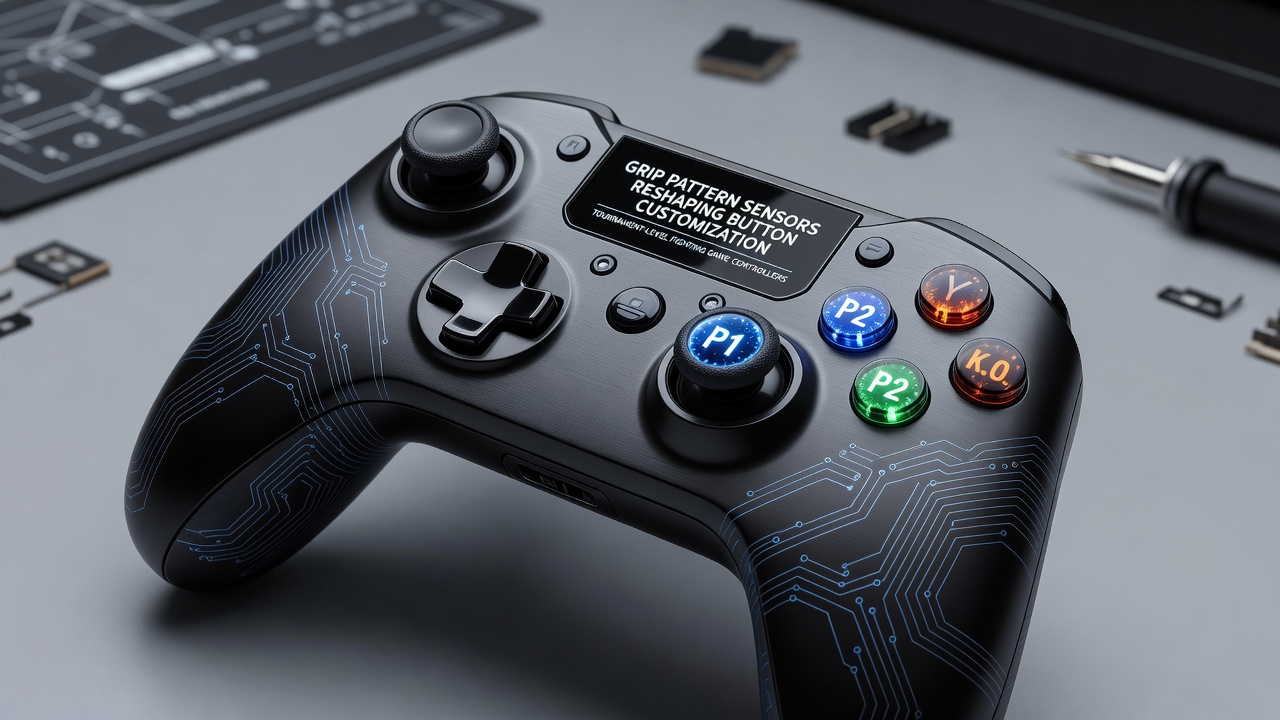
Grip Pattern Sensors Transform Button Mapping in Elite Fighting Game Controllers
Developments in sensor technology have introduced grip pattern detection systems that allow fighters to adjust button configurations based on individual hand positioning during matches, and this shift has gained traction among professional players preparing for major events scheduled through June 2026. These sensors embedded in controller grips capture pressure distribution and finger placement data in real time, feeding information directly into onboard microprocessors that remap inputs without requiring external software adjustments.
Manufacturers have integrated arrays of capacitive and resistive elements beneath the grip surfaces, which register variations in contact force as players execute complex combos in titles such as Tekken 8 and Street Fighter 6. Data from these readings enables automatic fine-tuning of button sensitivity thresholds, reducing input conflicts that arise when grips shift during extended sets. Tournament organizers have noted increased adoption rates since prototypes debuted at regional qualifiers earlier this year.
Core Mechanics Behind Grip Detection Systems
Each sensor array consists of multiple zones distributed across the left and right handles, sampling at frequencies exceeding 1,000 Hz to capture subtle changes in palm and finger pressure. When a player maintains a high-tension grip during rapid inputs, the system identifies the pattern and suggests or applies preset layouts optimized for that configuration, while lighter grips trigger alternate mappings suited for defensive play. This process occurs through firmware-level processing that avoids adding measurable latency beyond established baselines for wired controllers.
Industry reports indicate that calibration routines completed prior to matches take under thirty seconds, allowing competitors to store multiple profiles tied to specific character selections or matchup conditions. Engineers at major peripheral firms have refined the algorithms using datasets collected from over 500 documented training sessions across North American and European circuits.
Integration With Existing Tournament Hardware Standards
Compatibility extends to devices already approved under current esports regulations, since the added components fit within existing form factors without altering overall weight or balance specifications. Players can toggle the feature through a dedicated switch on the controller backplate, ensuring compliance during bracket play where modifications must remain reversible. Several teams have incorporated these units into their standard loadouts for events hosted by organizations tracking equipment through standardized verification protocols.
What's interesting here involves the way data flows between the grip sensors and button matrices, because the system cross-references pressure signatures against stored baselines before executing remaps. Observers note that this approach minimizes accidental overrides during high-stakes moments when hand positioning changes rapidly under stress.
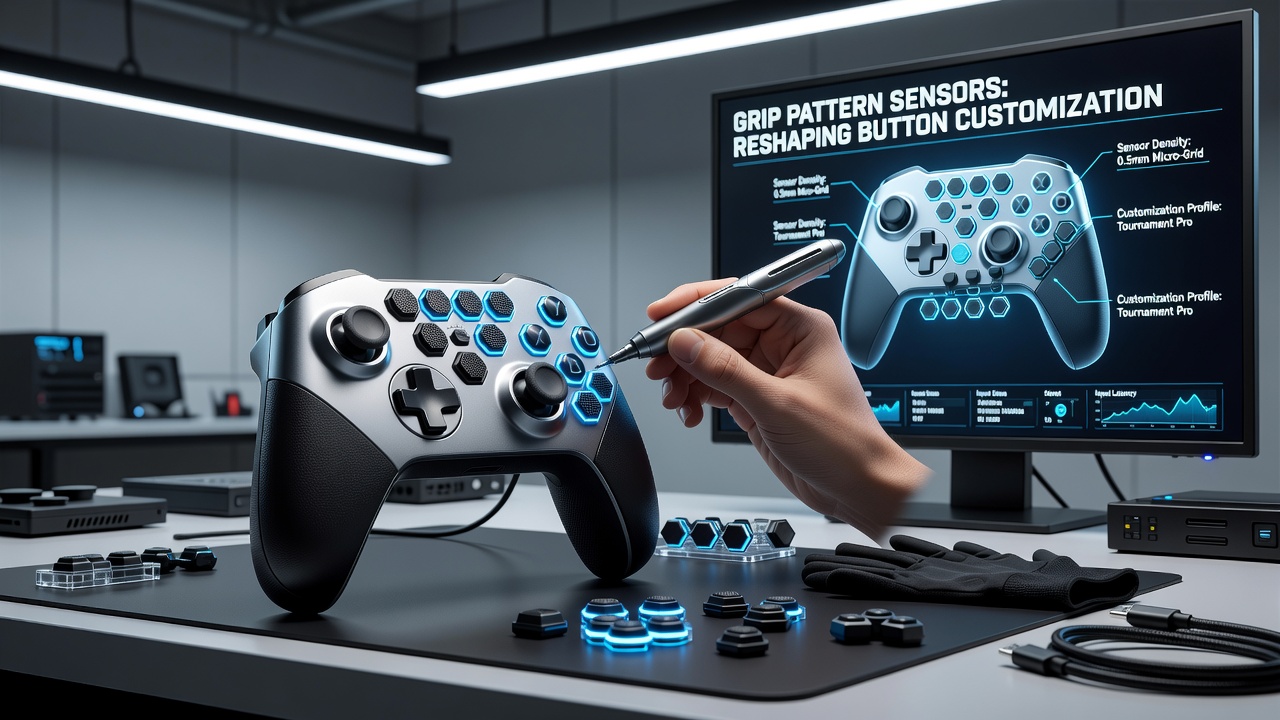
Performance Data From Recent Events
Figures released following the Asia-Pacific regional series in early 2026 show that participants using grip-aware controllers recorded an average reduction of 12 milliseconds in effective input registration times during pressure-intensive sequences, according to aggregated logs submitted to event technical committees. Research conducted through partnerships with institutions in Japan and Canada has examined signal integrity across wireless variants, confirming stable performance even when multiple units operate simultaneously in arena environments.
Teams have documented cases where customized mappings derived from grip data improved execution consistency for specific movesets, particularly those involving simultaneous button presses that previously suffered from overlap errors. One documented instance at a European circuit stop revealed that a player adjusted layouts mid-tournament based on sensor feedback after noticing grip fatigue patterns during day-two matches.
Broader Implications for Controller Design Evolution
Component suppliers have begun offering modular grip panels pre-fitted with sensor arrays, enabling smaller manufacturers to incorporate the technology into mid-range products without extensive retooling. This accessibility has expanded options for amateur circuits feeding into professional brackets, where equipment budgets remain constrained. Data shared via industry consortiums highlights adoption curves mirroring those seen with earlier input latency reduction features introduced around 2023.
Academic studies from university labs in Australia and the EU continue to analyze long-term effects on player ergonomics, focusing on how adaptive mappings influence repetitive strain patterns over multi-day events. Results so far point to measurable differences in reported hand fatigue levels when compared against static layouts.
Conclusion
Continued refinement of grip pattern recognition continues to align controller behavior more closely with individual playstyles at the highest competitive levels, supported by ongoing firmware updates and hardware iterations expected through the remainder of 2026. As sensor precision improves and integration standards solidify, these systems represent another incremental step in the ongoing specialization of fighting game peripherals.