Graphene-Infused Circuits Deliver Consistent Throughput in Compact Motherboards During Extended Strategy Play
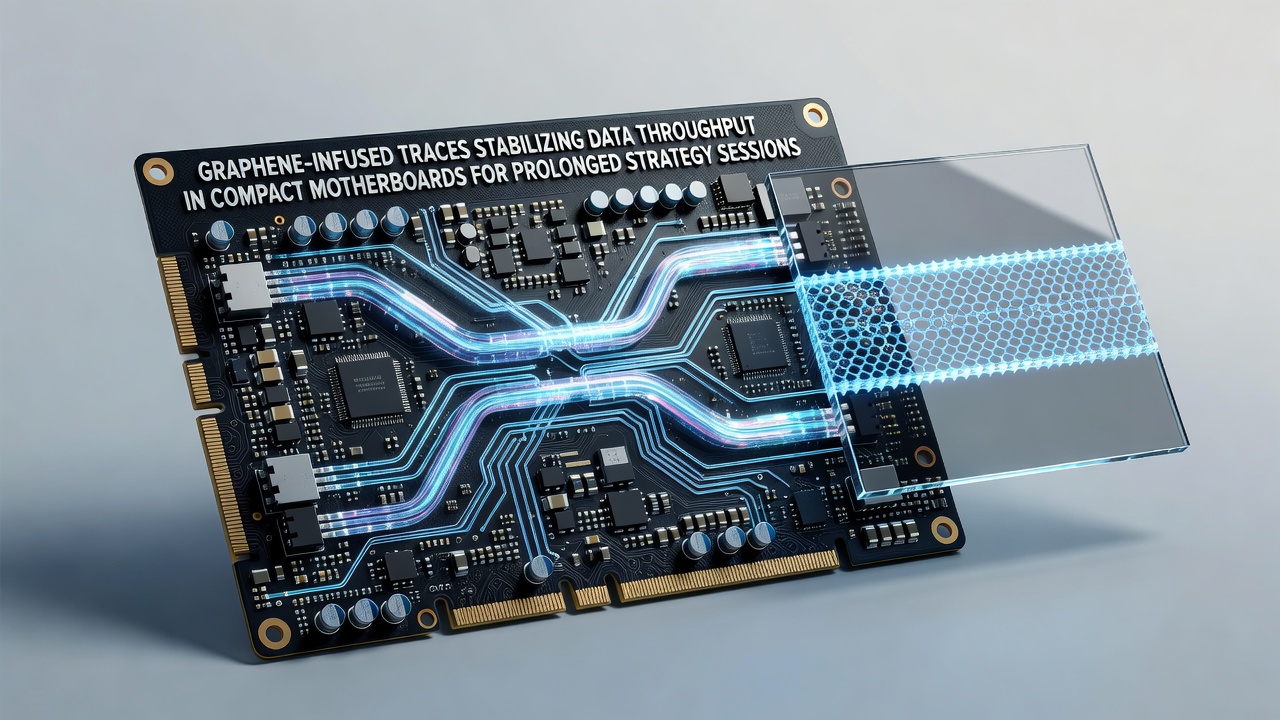
Graphene-infused traces represent a materials advancement that addresses signal degradation challenges in small-form-factor motherboards, and manufacturers have integrated these conductive pathways to maintain reliable data movement across components during lengthy sessions of turn-based and real-time strategy titles. Research indicates that traditional copper traces often experience resistance buildup under sustained loads, whereas graphene composites reduce this effect through superior electron mobility and thermal distribution properties.
Material Properties Behind Trace Enhancements
Engineers incorporate graphene layers into substrate materials because the two-dimensional carbon structure conducts electricity more efficiently than copper at nanoscale thicknesses, and this allows designers to shrink board layouts without sacrificing bandwidth between CPU, memory controllers, and storage interfaces. Data from laboratory tests shows that graphene composites sustain higher current densities before heating becomes problematic, which proves useful when multiple high-speed buses operate simultaneously in confined chassis spaces.
Studies conducted at institutions across North America and Europe demonstrate measurable reductions in crosstalk and electromagnetic interference when graphene replaces portions of conventional routing, and these improvements translate directly to steadier frame delivery and reduced input lag in games that rely on frequent AI calculations and map updates. Observers note that the material's flexibility also supports tighter bend radii around other components, enabling more compact layouts that still meet signal integrity standards set by industry groups such as the PCI-SIG consortium.
Performance in Prolonged Gaming Environments
Compact motherboards equipped with graphene traces exhibit lower variance in data throughput metrics over multi-hour operation periods, according to benchmarks published by hardware testing organizations in 2025. Strategy games often generate continuous streams of pathfinding data, unit state updates, and network synchronization packets, and any momentary drop in bus performance can manifest as stuttering or delayed responses. The enhanced traces minimize these fluctuations by dissipating heat more evenly across the board surface, thereby keeping impedance values within tighter tolerances even as ambient temperatures rise inside portable or small-tower cases.
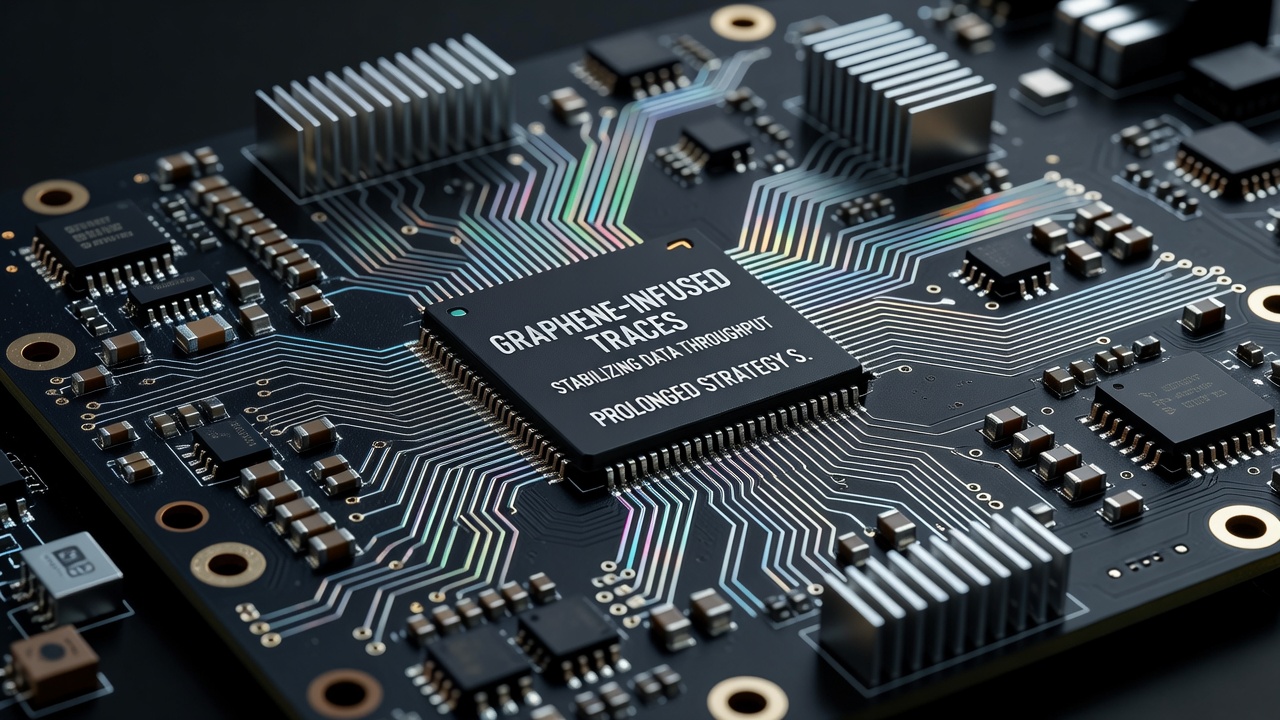
Figures released by the National Institute of Standards and Technology in the United States highlight how graphene integration lowers bit error rates on high-speed serial links by up to 40 percent compared with standard FR-4 constructions during continuous workloads. European research consortia have reported similar outcomes in dense multi-layer boards, confirming that the material helps preserve timing margins required for DDR5 and PCIe 5.0 protocols when systems remain active for extended durations.
Developments Scheduled for Mid-2026
Industry roadmaps indicate that several board vendors plan to introduce graphene-trace models at trade events in June 2026, and these releases target both enthusiast mini-ITX platforms and specialized compact systems used in tournament environments. Early samples have already circulated among select system integrators, with reported throughput stability improvements appearing most pronounced when paired with high-core-count processors that generate heavy inter-component traffic during complex scenario calculations.
Academic papers presented at the IEEE International Conference on Nanotechnology further detail how hybrid copper-graphene stacks can be manufactured using existing PCB processes, which reduces barriers to adoption for mid-volume production runs. Those who've examined the fabrication data observe that deposition techniques allow selective placement of graphene only along critical high-speed routes, preserving cost efficiency while delivering targeted performance gains where they matter most for sustained operation.
Integration Challenges and Solutions
Although graphene offers clear electrical advantages, achieving uniform adhesion between the carbon layer and dielectric substrates requires precise process controls, and manufacturers continue refining chemical vapor deposition parameters to avoid delamination during thermal cycling. Supply chain analyses from trade associations in Asia and Australia show increasing availability of high-purity graphene powders suitable for electronics applications, which supports broader implementation across different motherboard segments.
Testing protocols developed by the European Committee for Electrotechnical Standardization now include specific stress sequences that simulate continuous strategy gameplay loads, and boards passing these evaluations demonstrate consistent latency profiles across eight-hour continuous runs. Such validation helps system builders specify components with greater confidence when assembling rigs intended for marathon events or extended content creation workflows.
Conclusion
Graphene-infused traces continue to gain traction as a practical enhancement for compact motherboards that must maintain data integrity under prolonged computational demands, and ongoing refinements in deposition methods alongside expanded material supply point toward wider availability in coming product cycles. The combination of improved conductivity, thermal management, and signal stability positions this technology as a notable contributor to reliable performance in space-constrained gaming and simulation hardware.