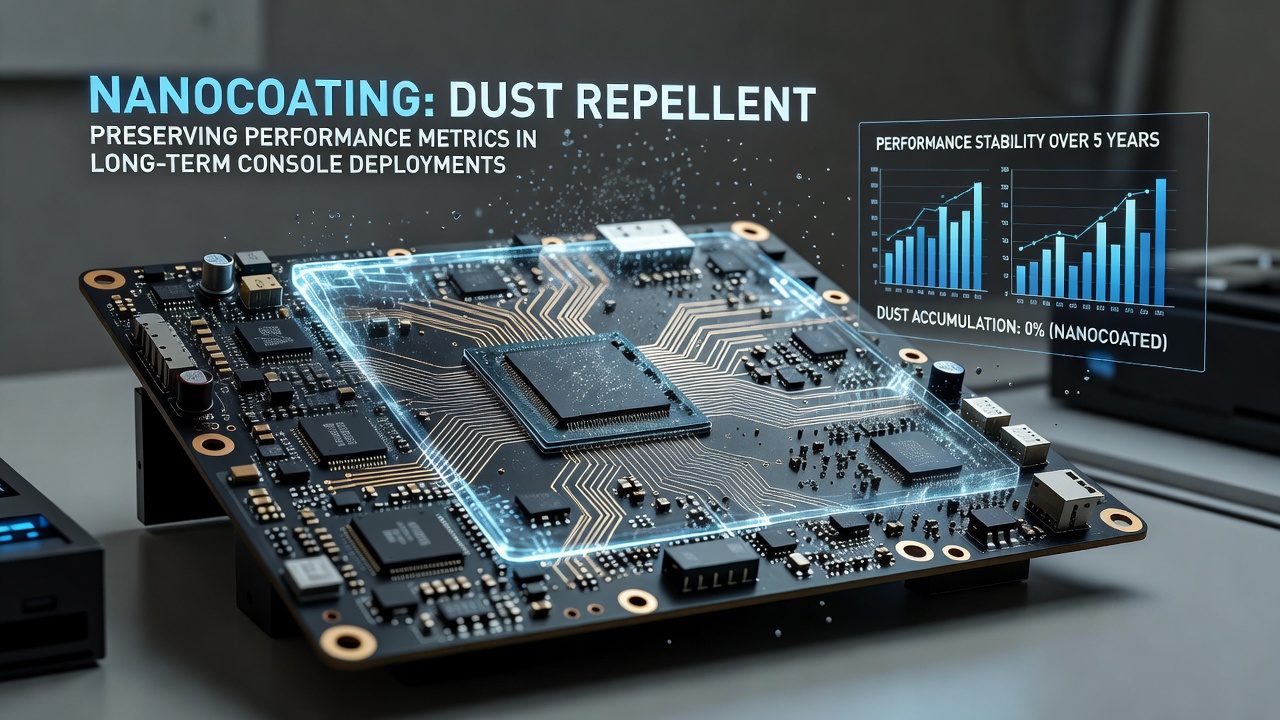
Dust Defense Layers: Nanocoatings Maintain Console Circuit Integrity During Extended Deployments
Console manufacturers have turned to nanocoatings as a practical solution for managing dust accumulation on internal circuit boards during prolonged operation periods, and this approach addresses performance consistency across years of continuous use in both commercial and residential environments. These ultra-thin protective films, typically measured in nanometers, create barriers that limit particle adhesion while allowing normal thermal dissipation and electrical conductivity to continue without interference.
Composition and Application Methods
Engineers apply nanocoatings through vapor deposition or spray processes that bond molecular layers directly to board substrates, and these materials often incorporate fluoropolymers or silica-based compounds that repel both organic and inorganic particulates. Research from institutions across multiple regions shows that coating thicknesses between 50 and 200 nanometers provide optimal coverage without adding measurable weight or altering signal pathways in high-frequency components.
Application occurs after standard assembly but before final enclosure sealing, which ensures every exposed trace and solder joint receives uniform treatment. Technicians monitor deposition rates in controlled chambers to achieve consistent results across production batches, and quality checks verify surface energy levels that determine how effectively dust particles fail to stick during airflow from cooling fans.
Performance Preservation in Long-Term Use
Dust buildup on untreated boards restricts airflow around heat-generating elements such as processors and voltage regulators, which leads to elevated operating temperatures and gradual declines in clock speed stability over months of daily operation. Coated boards resist this accumulation, so thermal sensors record lower average readings during stress tests that simulate extended gaming sessions, and frame delivery metrics remain closer to original specifications even after 18 to 24 months of continuous deployment.
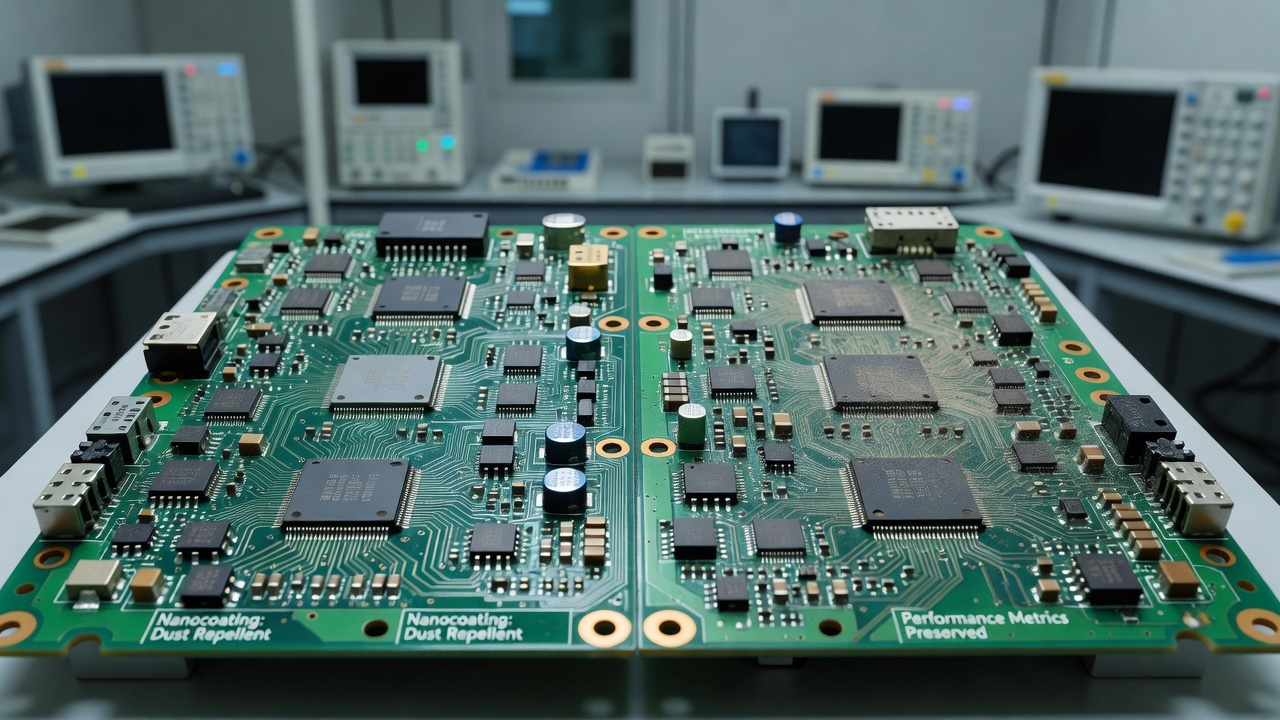
Studies conducted by European research consortia indicate that consoles with nanocoated boards experience up to 40 percent less particle retention compared with uncoated equivalents under identical environmental conditions. This reduction translates directly into sustained memory access speeds and graphics rendering consistency, because dust-related impedance changes remain minimal across power cycles and temperature fluctuations common in living rooms or arcade installations.
Real-World Deployment Examples
Commercial gaming venues in Australia have integrated coated boards into fleets of consoles operating 12 hours daily, and maintenance logs from these sites reveal fewer thermal throttling events during peak summer months. One facility reported stable performance metrics through July 2026 without requiring additional filter replacements, which reduced downtime associated with internal cleaning procedures.
Residential users who keep systems running for background downloads and cloud streaming sessions notice similar patterns, because reduced dust layers prevent gradual resistance increases in connector pins that otherwise affect input response times. Observers note that consoles placed in dusty climates benefit most from this protection, since regional air quality data correlates with faster performance degradation in unprotected units.
Integration with Existing Cooling Systems
Nanocoatings complement rather than replace fan-based cooling architectures, because the thin film does not impede air movement yet prevents particles from settling on finned heatsinks and exhaust paths. Engineers design these systems so that fan speeds can remain at moderate levels longer, which extends component lifespan by limiting mechanical wear on moving parts while maintaining target junction temperatures.
Industry reports from North American testing laboratories confirm that coated boards paired with adaptive fan algorithms show improved energy efficiency ratings, since lower dust loads reduce the need for aggressive cooling cycles that consume additional power. This synergy supports console designs aimed at 24/7 operation in streaming setups or tournament environments where uninterrupted uptime matters.
Limitations and Ongoing Developments
Coatings can degrade if exposed to certain solvents during unauthorized repairs, and manufacturers therefore include warnings in service documentation to preserve protective properties. Abrasion from repeated handling during upgrades also represents a potential concern, though most consumer-level interventions occur infrequently enough that surface integrity holds through typical product lifecycles.
Current research focuses on self-healing formulations that repair minor scratches through molecular rearrangement, and early prototypes tested at Canadian academic facilities demonstrate promising durability under mechanical stress. These advancements aim to extend protection intervals beyond the current five-year benchmarks observed in field data.
Conclusion
Nanocoatings represent a targeted engineering response to dust-related performance drift in long-term console deployments, and they deliver measurable benefits in thermal management and component reliability when applied during manufacturing. Continued refinement of application techniques and material formulations supports broader adoption across consumer electronics categories facing similar environmental challenges.