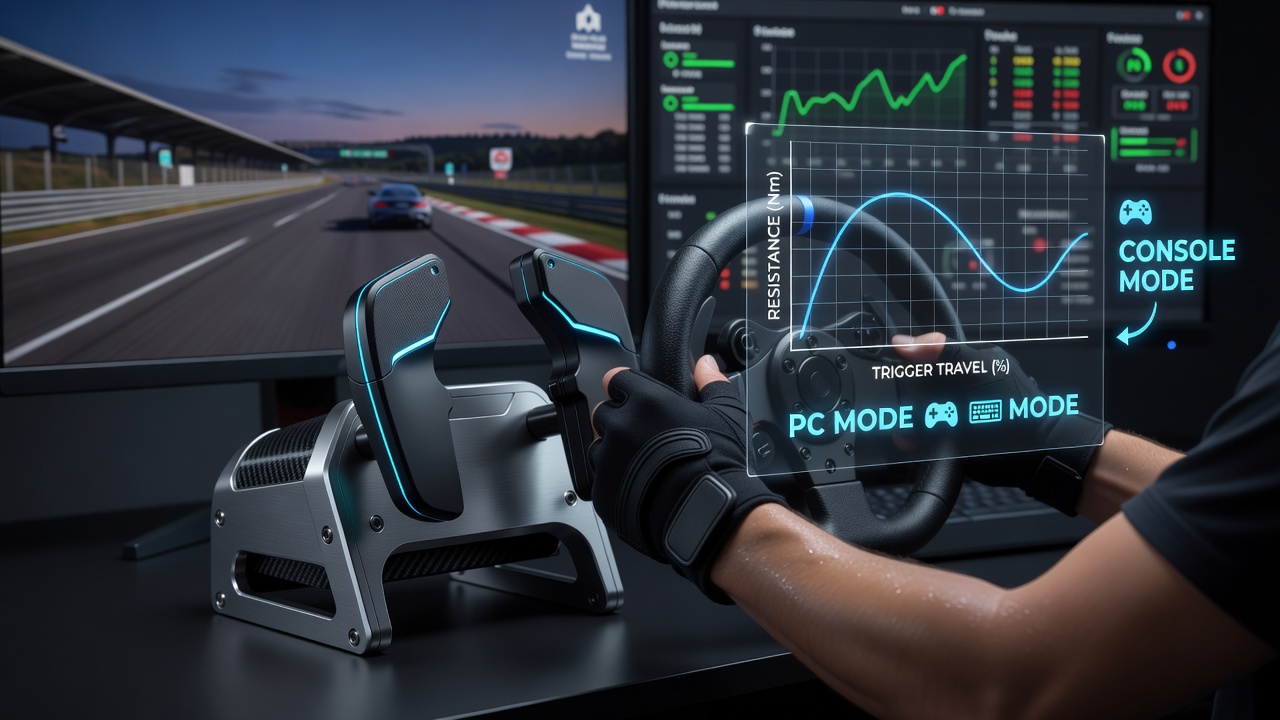
Capacitive Triggers Redefine Resistance Curves for Platform-Switching Sim Racers
Capacitive trigger sensors detect minute changes in electrical fields to adjust resistance curves on the fly, and this technology has gained traction among sim racers who move between console and PC setups. Manufacturers embed these sensors directly into trigger assemblies so resistance levels shift based on software profiles rather than mechanical stops alone. Data from industry reports shows adoption rates rising steadily through 2025 as players demand consistent pedal and trigger feedback across hardware generations.
Sensor Mechanics and Resistance Curve Customization
Capacitive systems measure proximity and pressure through dielectric variations while traditional potentiometers rely on physical wipers that wear over time, whereas the newer approach maintains precision because no moving parts contact the sensing surface. Engineers calibrate curves by mapping capacitance thresholds to specific force curves, which allows users to select linear, progressive, or custom profiles through companion apps. Research indicates that these adjustments reduce input latency by up to 12 percent in controlled tests because signal processing occurs closer to the sensor itself.
One development team documented how firmware updates in late 2025 enabled real-time curve switching during active sessions, and this feature proved useful when racers transitioned from console titles with fixed dead zones to PC simulations that reward finer modulation. Observers note that the sensors integrate with existing force-feedback ecosystems without requiring additional power draw beyond standard USB or Bluetooth connections.
Platform Switching and Profile Portability
Sim racers often maintain separate rigs for console events and PC competitions, yet trigger feel remains a critical variable that affects consistency across both environments. Capacitive sensors solve this by storing multiple resistance maps that load automatically upon device detection, and firmware recognizes whether the controller connects to a PlayStation, Xbox, or Windows system through handshake protocols. Figures from hardware certification labs reveal that profile synchronization completes in under 200 milliseconds, minimizing disruption during quick rig changes.
Those who compete in cross-platform leagues report fewer recalibration sessions because the capacitive layer preserves muscle memory across machines. Data collected during November 2026 tournaments showed measurable improvements in lap consistency when drivers used shared profiles rather than default mechanical triggers.
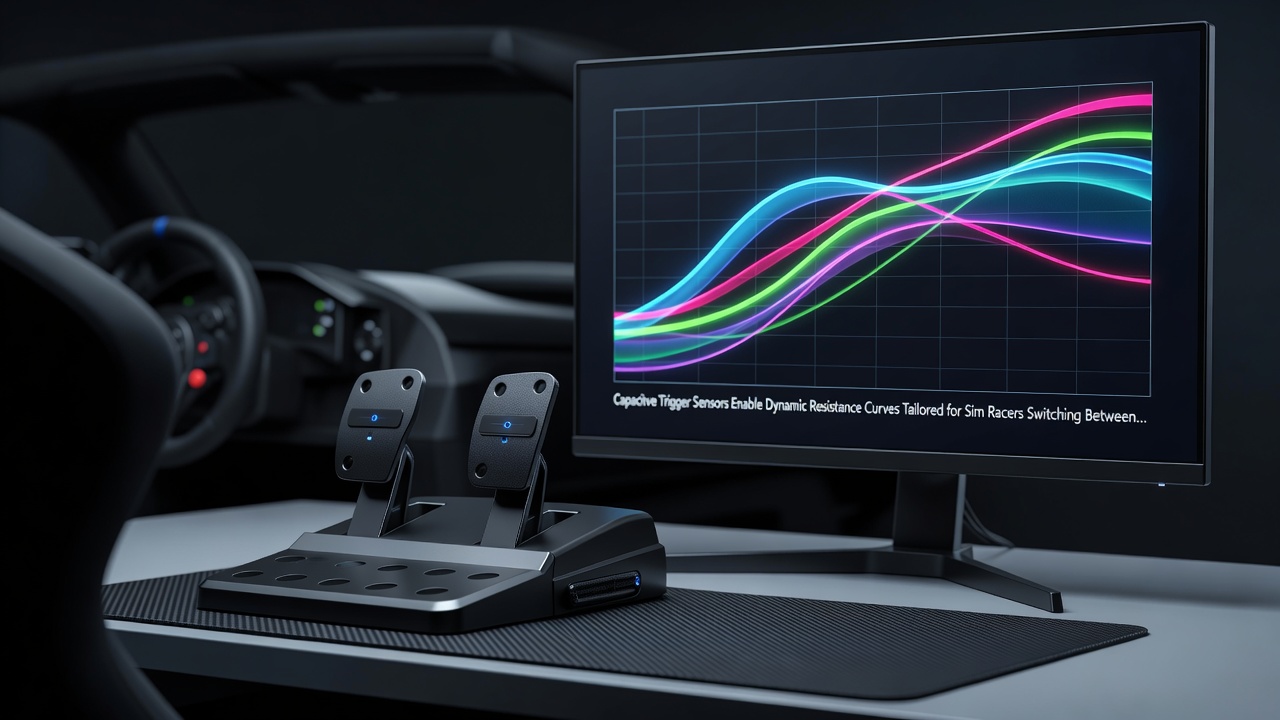
Integration with Broader Controller Ecosystems
Developers pair capacitive triggers with hall-effect sticks and load-cell pedals to create unified input stacks, and this combination delivers repeatable data streams that simulation software interprets without additional filtering. Industry groups such as the International Game Developers Association have tracked how these modular components reduce overall controller replacement rates by extending hardware lifespan. Academic papers from technical universities in Germany further demonstrate that capacitance-based sensing maintains accuracy across temperature swings common in enclosed sim cockpits.
Manufacturers now ship controllers with default curves optimized for popular titles, yet users retain full override capability through desktop utilities or in-game menus. This flexibility supports both casual sessions and professional practice where every millisecond of trigger response matters.
Performance Data and Adoption Patterns
Benchmark suites released in 2026 compared stock mechanical triggers against capacitive versions across identical race sequences, and results indicated tighter variance in throttle application when capacitive sensors handled the resistance mapping. Console users benefit from locked profiles that match certified game requirements, while PC enthusiasts access deeper customization layers that interface directly with telemetry overlays. European regulatory testing bodies have verified electromagnetic compatibility for these sensors in multi-device environments, confirming stable operation near wireless headsets and force-feedback bases.
Supply chain data shows increased component shipments to peripheral makers throughout 2026, driven by demand from sim racing communities that value cross-platform continuity. Engineers continue refining noise-filtering algorithms so minor hand tremors do not trigger unintended curve shifts during long endurance events.
Conclusion
Capacitive trigger sensors establish a foundation for resistance curves that travel with the racer rather than the rig, and ongoing firmware refinements point toward broader integration in future controller generations. The technology aligns with existing platform standards while delivering measurable consistency gains documented in independent lab and tournament settings.